

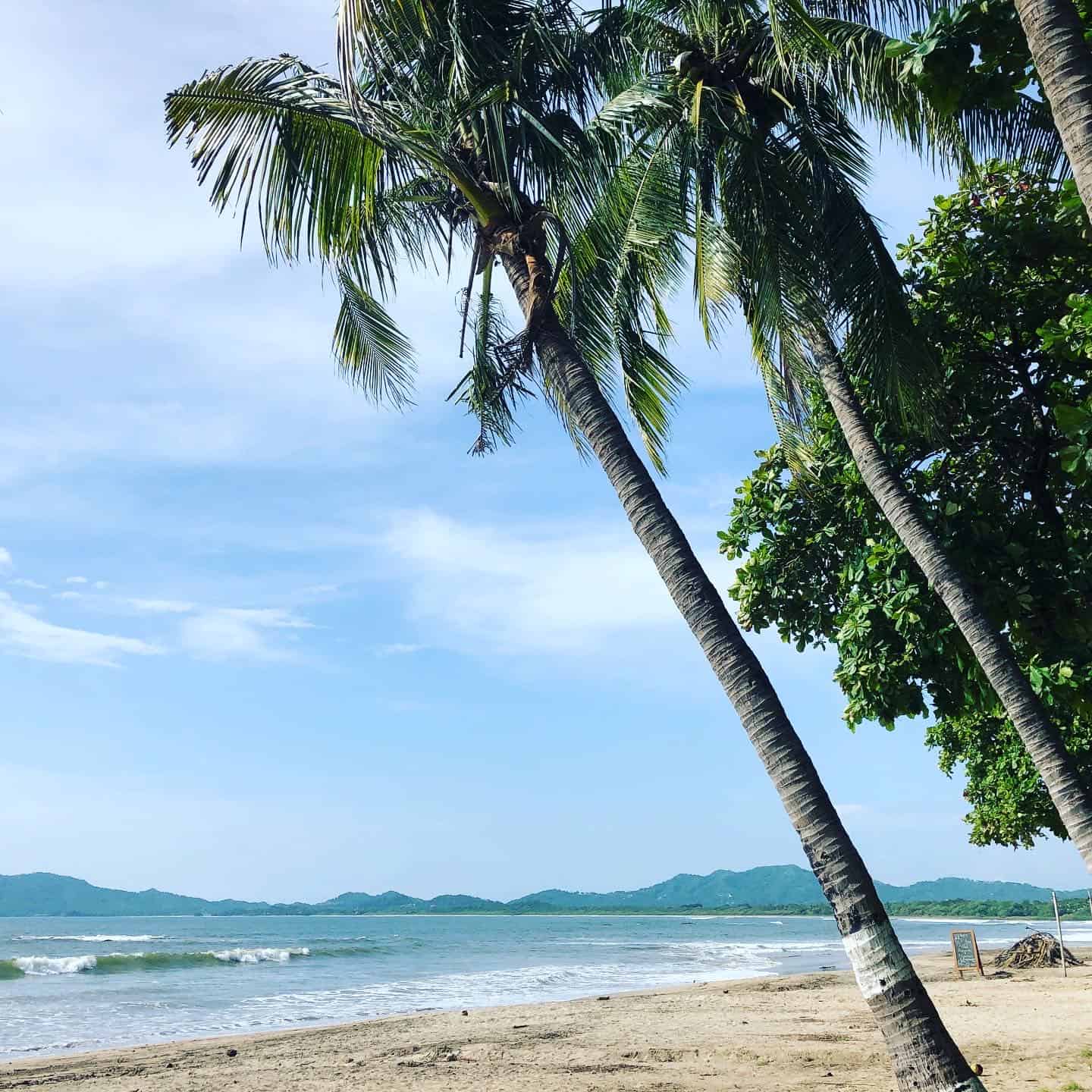
The northwestern province of Guanacaste is a dry frontier land where people come to discover the harmonious beauty of endless soft beaches and warm waves.
It hasn’t always been that way.
The home and namesake of Costa Rica’s national tree has a unique history and culture gone gritty from cattle ranching, with a memory of U.S. invaders and where a regional identity oscillates between neighboring nations. The 10,400-square-kilometer province, with its 11 cantons, more than 50 beaches and several national parks and reserves, isn’t today what it once was.
Before the construction of the Inter-American Highway connected the province with the rest of Costa Rica, before the arrival of mass tourism and the development of the region’s beaches and international airport, Guanacaste was a big, bumpy cow town.
Inland, it’s not hard to poke around and find that Guanacaste is a bumpy place with bumpy roads, where dark-skinned sabaneros ride bucking broncos and locals dance marimba and the punto guanacasteco.
But even before that, Guanacaste was an expansive land treasured for its exotic mahogany woods, where foreign demand played a key role in deforestation, leaving behind a seemingly endless, rolling savanna –where the sabanero, the Guanacaste cowboy, would find his home between the region’s two mountain ranges and four volcanoes. And before that?
According to Universidad Nacional (UNA) professor Victor Hugo Acuña, Guanacaste’s largely mestizo culture maintains some ancient Chorotega customs, such as using digging sticks in agriculture and traditional forms of pottery, kept alive in the town of Guaitil, known for its indigenous pottery replicas.
The Corobicí people are thought to have first migrated to the area, followed by the Chorotegas, who arrived around 1200 and brought with them a corn culture of tamales and tortillas, as well as other agriculture such as beans, sweet potatoes and yuca (cassava or manioc).
Spanish explorers, looking for a strategic interoceanic passage through the Americas, arrived on the scene in 1523, and later brought African slaves with them.
The region became the Partido de Nicoya, an independent region within the Spanish Empire, before it later became part of a newly independent Nicaragua, after the Central American region declared its independence from Spain in 1821. But in 1824, despite the now provincial capital of Liberia’s insistence upon staying with Nicaragua, Guanacaste seceded from Nicaragua to Costa Rica.
In 1856, a plot to seize control of a strategic interoceanic transportation route across Central America brought U.S. filibuster William Walker to Guanacaste. The way a fprmer University of Costa Rica (UCR) history professor tells it, Walker wanted to get his hands on what was one of the United States’ biggest investments in Latin America at the time: Wall Street tycoon Cornelius Vanderbilt’s Accessory Transit Company.
The company specialized in transporting North Americans – via land and sea – from New York and the eastern United States, through Central America, and back up to San Francisco, California, during the gold rush.
Passengers were shipped through the Caribbean, up the Río San Juan into Lake Nicaragua, and then rode stagecoaches across what was then the shortest Atlantic to-Pacific land route (which has since been the site of innumerable failed attempts to build an interoceanic canal), and then shipped up to California.
Walker, now a despised symbol of U.S. interventionism in Latin America, didn’t have enough mercenaries to conquer the region, according to Molina. Instead, he took control of some of the Accessory Transit Company’s boats and tried to monopolize the interoceanic route.
A few of Walker’s 1,000 mercenaries entered Costa Rica in March 1856 while exploring the area. They didn’t stay long. On March 20, the mercenaries met Costa Rican troops who ran them off after a 15-minute battle known as the Battle of Santa Rosa. After a brief stint as the self-appointed President of Nicaragua, the Tennessee-born physician, lawyer and journalist was executed by the Honduran government in 1860.
Livestock arrived in Guanacaste in the 17th century and expanded as the region’s major industry into the 18th century. Then, in the 19th century, logging became a big industry into the 20th century.
Acuña said the most important advance in Guanacaste in the 20th century was the completion of the
in the 1960s, which increased trade and communication between the mainland and the region tucked away in the country’s northwest corner.
During the Cold War era,Guanacaste was a strategic southern front for the United States’ allegedly illegally funded Contra war against the communist Sandinistas in Nicaragua.
Costa Rican authorities discovered a clandestine land strip on the SantaElenaPeninsula that was used to supply Contras, a key find in the unraveling of the Iran-Contra affair.
Now, booming development on the region’s coast has brought billions in foreign investment, set off a boom in real estate that has given rise to an abundance of both million-dollar homes and beachfront concession scandals, and is raising questions about how a region that gets 65 days of rainfall a year plans to find the water to support its own growth.





