
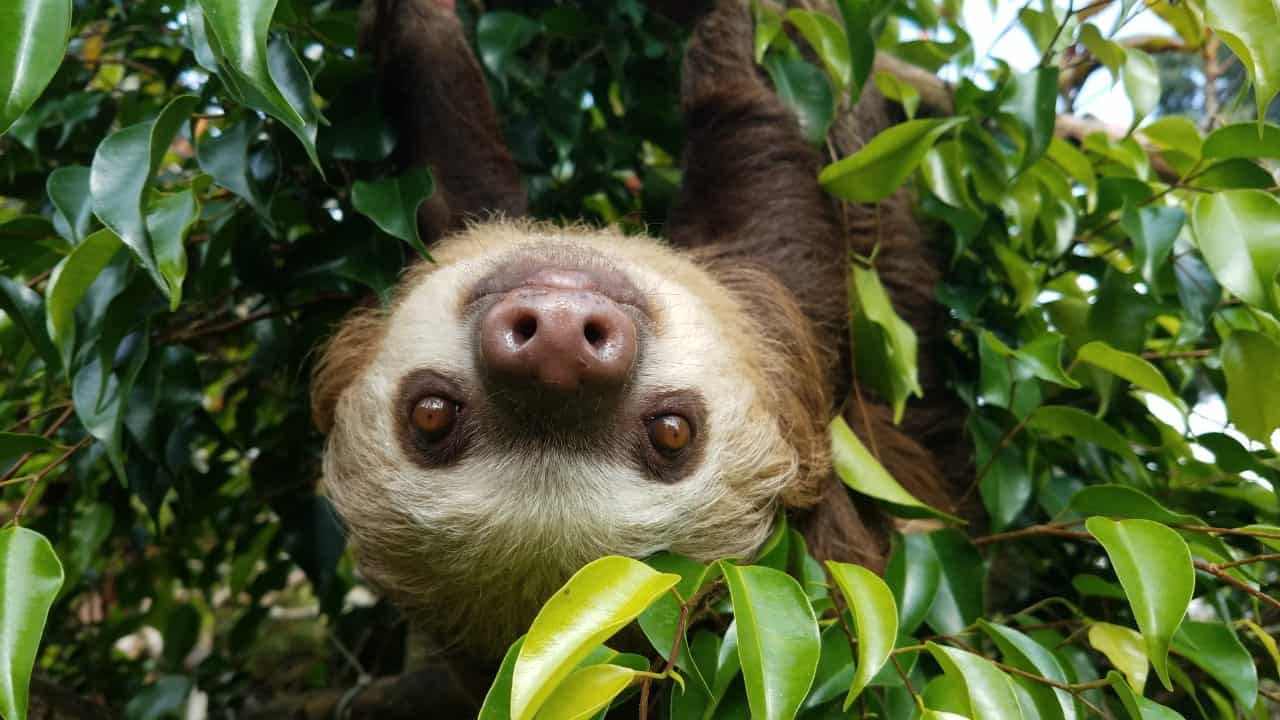
The two- and three-toed sloth have officially become national symbols of Costa Rica after a unanimous vote by lawmakers and a signature from President Carlos Alvarado.
The move highlights the importance of Hoffmann’s two-toed sloth and Brown-throated three-toed sloths, Costa Rica’s two native species. It also seeks to improve conservation of the iconic mammals.
“Indirectly, the sloth has been built as a national symbol, as a distinctive of our country, without having been officially declared as such,” the law’s text reads, noting that “no other animal in our territory has enjoyed such popularity.”
The ruling tasks the Environment Ministry with ensuring “the proper conservation of sloth species.” It also encourages the Tourism Board to use sloths in local and international advertising campaigns.
“With this law, we will ensure the adequate conservation of the sloth populations living in our territory and will ensure the proper protection of their natural habitat,” said President Alvarado.
The national symbols of Costa Rica
The national symbols of Costa Rica represent the country, its people and its traditions.
The Coat of Arms (National Shield): Declared as a national symbol in 1948 in order to strengthen the organization of the three Powers of the Republic and provide the country with symbolism in its international relations.
The Flag of Costa Rica: Declared as a national symbol in 1948. The representation of the three colors is as follows: blue represents the sky that covers and protects Costa Rica; white symbolizes the peace that exists in the country and the purity of its ideals; red evokes the courage of the Costa Rican people to defend their democratic system.
La Guaria Morada: The national flower since 1939, after the request of several prominent figures of the time.
The Guanacaste Tree: A national symbol since 1959. It was granted such status in a context where the country had been promoting the protection of natural resources.
The Yigüirro: In 1977, the Yigüirro was decreed as the national bird due to its harmonious song. But it’s not much to look at.
The National Anthem of Costa Rica: It has been declared a national symbol since 1949, so its teaching would be compulsory for patriotic activities.
La Carreta (Oxcart): La Carreta was declared a symbol in 1988. Its historical role in economic and social development is recognized as an expression of popular art. The decorated wagon has been a hallmark worldwide and has fostered artisanal creation and production. It was declared by UNESCO as an Intangible Cultural Heritage of Humanity.
The White-tailed Deer: Declared a symbol of the fauna of Costa Rica in 1995.
The Marimba: Declared a national musical instrument since 1996. Among other reasons, it was considered to be linked to the most diverse popular festivities in Costa Rica. Its manufacture and execution has been passed down for generations through oral tradition.
The Independence Torch: Declared a national symbol in 2005, based on a project that intended to celebrate Central American independence.
Los Crestones at Chirripó National Park: Declared a national symbol in 2011 in order to promote tourist attraction to said park.
The Manatee: Declared a national symbol of the marine fauna of Costa Rica in 2014, from the initiative of two first-grade students interested in the protection of natural resources in the national territory.
The Pre-Columbian Indigenous Spheres: In 2014, UNESCO named the set of pre-Columbian chiefdom settlements with stone spheres of Diquís as a World Heritage Site. In that same year, it was declared a national symbol of Costa Rica.
The National Theater: The construction of the National Theater began in 1891. In 2018, it was declared a national symbol for being one of the most important buildings in national history and the country’s main architectural jewel.
Coffee from Costa Rica: In July 2020 coffee became a national symbol due to its role in Costa Rican economic, social and cultural development. The Costa Rican “grain of gold” has been a fundamental part of the national and local economy.