

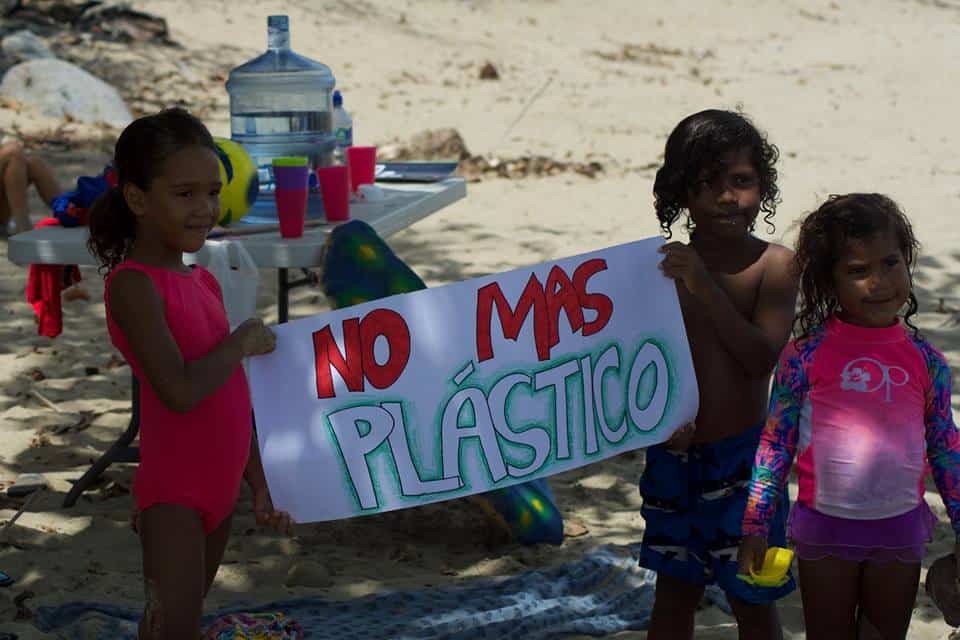
In the hustle and bustle of modern life, single-use plastics – straws, coffee stirrers, bags, bottles and most food packaging – can be synonymous with convenience, but disposable plastic is causing havoc on the planet. Plastic was invented approximately 100 years ago and is made from synthetic polymers. Polymers are repeated chains of molecules that can be found everywhere from cell walls to insects to DNA.
Synthetic polymers are derived from oil, natural gas and coal – components that are non-renewable and polluting. They’re durable and resistant to degradation. According to data from the National Strategy to Replace Single-Use Plastics, a plastic bag lasts an average of 12 minutes in our hands, but it takes between 500 to 1,000 years to decompose.
According to the United Nations Environment Programme (UNEP), single-use plastics manufacturing accounts for 50 percent of the plastic industry. One million plastic bottles are purchased every minute and up to 500 trillion plastic bags are used every year.
UNEP data also shows that approximately 300 million tons of plastic are generated every year and about 8 million tons of it ends up in the ocean. If this continues, oceans will have more plastic than fish by 2050.
Costa Rica generates 4,000 tons of solid waste every day. Of these, 20 percent is not collected, and 11 percent corresponds to plastic that ends up in Costa Rica’s beaches and rivers.
In 2017, the government launched the National Strategy to Replace Single-Use Plastics with Renewable and Compostable Alternatives. Its goal is to have Costa Rica become free of single-use plastics by 2020. The strategy is being carried out with the Ministry of Environment, Energy and Telecommunications (MINAET), the Health Ministry and the United Nations Development Programme (UNDP). It also has support from the private sector, civil society, and non-governmental organizations such as Costa Rica USA Foundation for Cooperation and MarViva.
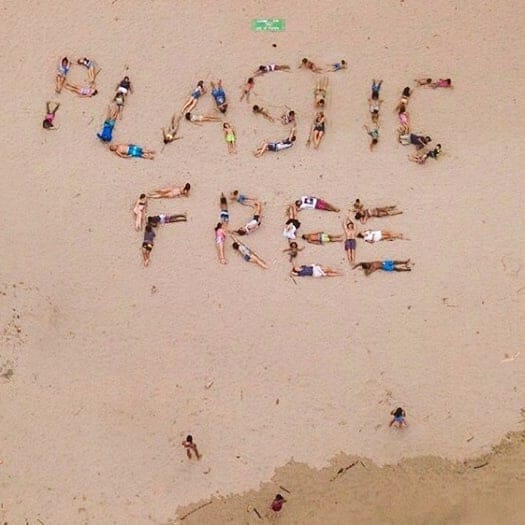
Located in Puerto Viejo on Costa Rica’s southern Caribbean, Asociación Conservación del Planeta, an organization focused on environmental conservation and education in Costa Rica, also supports the national strategy through a campaign called “Caribe Libre de Plástico.”
“We met some of the members who created the campaign, ‘Bahía Ballena Libre de Plástico’ in Uvita on the southern Pacific coast, and this campaign inspired and led us to create ‘Caribe Libre de Plástico,’” said Beate Heycke, the founder and director of Asociación Conservación del Planeta. “We thought this could be of great contribution to the Caribbean.”
Heycke said that the Caribe Libre de Plástico campaign aims to raise awareness and promote a shift in consumers’ behavior. She stated that it is important to educate people about different topics: recycling, trash classification and plastic replacement.
Jewinson Brown, an environmental supervisor at the Municipality of Talamanca in Limón province, said that estimates suggest that approximately 60 tons of solid waste are generated every week just on the southern Caribbean area.
Environmental damage
“On holidays, we can see beautiful beaches not clean and covered with litter, food packaging, styrofoam, cans, et cetera. Many times, we have found litter mixed with organic waste. Proper disposal is crucial for a healthy environment,” Heycke said.
Plastic is highly detrimental to oceans in part because it does not completely disappear — it becomes tiny plastic particles, many of which are swallowed by fish. Marine life can get trapped in plastic and plastic bags clog drainage systems; this proliferates breeding grounds for mosquitoes, which transmit malaria and dengue fever.
“We need to pay attention to water pollution,” Heycke said.
Because of this, the campaign “Caribe Libre de Plástico” includes a beach cleanup day every month, in which they urge locals to take part.
Environmental education through the Environmental Kids Club
“Environmental education is crucial to accomplish these goals,” said Valentina Costantino, a projects assistant at Asociación Conservación del Planeta.
Costantino said that the campaign “Caribe Libre de Plástico” has also been carried out through the organization’s “Environmental Kids Club,” a project in which children learn about environmental issues through workshops, presentations and field trips.
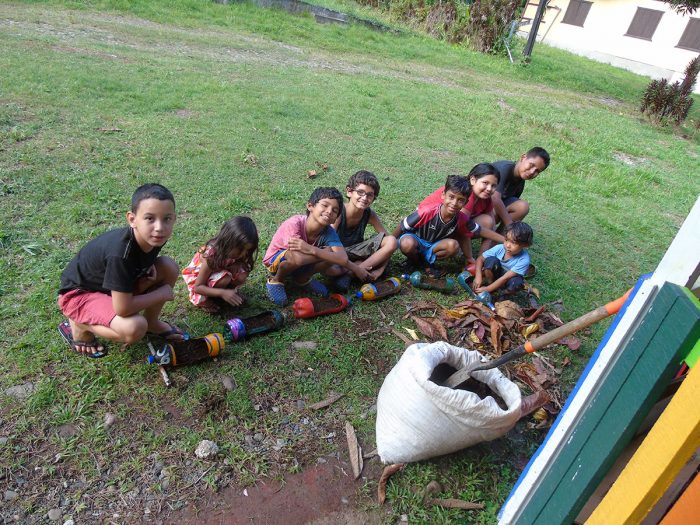
“Passing on this valuable knowledge to the next generations is imperative; we want to educate future environmental leaders within the community,” Constantino said.
“Our goal is to reach out to more kids in nearby communities like Manzanillo, Hone Creek, Bribri, Cahuita. We would like to have a permanent Environmental Kids Club in Hone Creek and encourage kids to think about environmental issues and solutions. This is our task.” However, Costantino said that financial support is still a challenge. Currently, the Environmental Kids Club relies on donors to fund its projects.
Join the Caribe Libre de Plástico Campaign
Heycke emphasized that it is important to urge companies and consumers to choose new alternatives to replace single-use plastics. Since its launch in April 2018, “Caribe Libre de Plástico” has been supported by Puerto Viejo’s Chamber of Commerce and Tourism, the local Association of Development and others.
According to Karla Murillo, coordinator at The Talamanca-Caribbean Biological Corridor Association, the biological corridor collects an average of 20 to 25 tons of plastic every month through its recycling center. So far, plastic collection has been mostly supported by businesses such as restaurants, hotels and private organizations.
“So far, local supermarkets only have plastic bags available, but recently one supermarket also joined the initiative, and it will offer consumers cloth bags,” Heycke said. Heycke also said the organization doesn’t just share information about new alternatives with organizations or businesses, but with the general public.
“We have to understand the meaning of a responsible purchase and being environmental and socially aware,” Heycke said. “We all can make a difference.” To become a better environmental steward, here are some suggestions from Caribe Libre de Plástico campaign:
- Use cloth bags for your purchases instead of plastic bags.
- Ask for your drinks without a straw.
- Store your food in glass or stainless-steel containers.
- Buy your products packaged in cardboard or glass.
- Use a reusable bottle for your water and fill it from the tap; most water in Costa Rica is potable.
If you would like to know more about this initiative, visit planetconservation.org





