

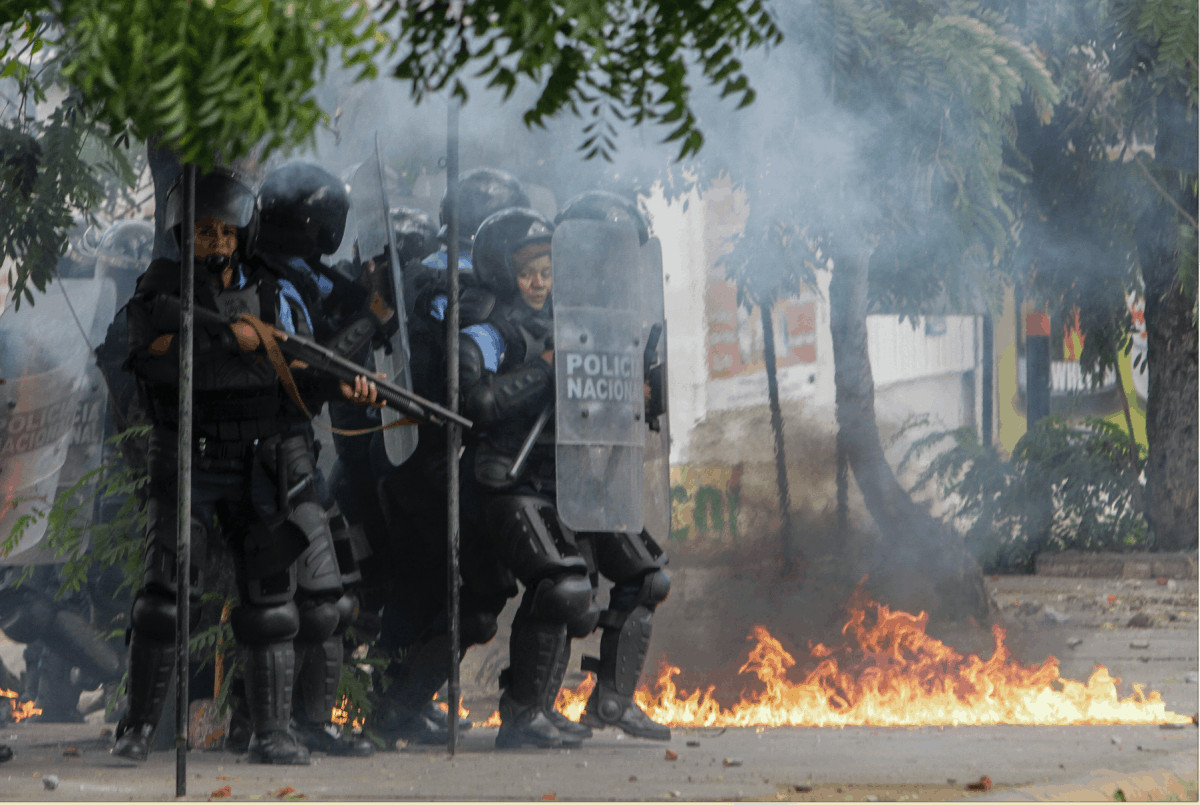
This time feels different. There’s an energy I haven’t felt before. A sense of urgency. A groundswell. The people of Nicaragua aren’t afraid anymore. Now the government is.
I’ve covered a lot of ugly protests in Nicaragua over the past two decades. I’ve seen people fight in the streets with rocks, clubs, and machetes. I’ve heard the panic of a stampeding crowd. I’ve seen riot police truncheon protesters like they were tenderizing steaks. I’ve smelled the thick smoke of burning tires and mortar fire. I’ve hidden from gangs of masked men patrolling the city with machetes in the backs of pickup trucks.
But I have never experienced the emotion of what’s happening in Nicaragua right now. The weird part is, I’m 3,000 miles away — in my other home, in the woods of North Carolina. But even from a distance I can see that the protests happening back in Nicaragua are more important than all the the ones I covered in person. This time feels different.
I’m not the only one who thinks so. My friends in Nicaragua think this one’s for real.
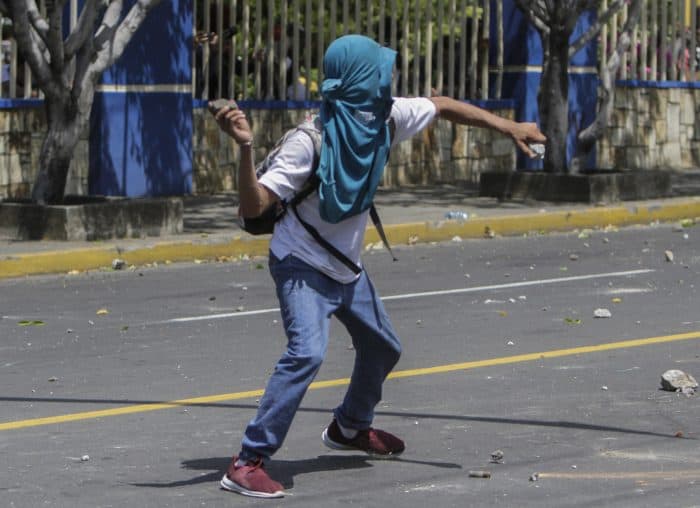
“There are small insurrections happening across the country. Nicaragua has experienced a before-and-after moment in the past 24 hours,” Gonzalo Carrión, legal director of the Nicaraguan Center for Human Rights (Cenidh), told me in a phone conversation Thursday night. “People have lost their fear. Nicaragua’s dynastic dictatorship has cracked. Its support columns have fractured.”
To be fair to history, I’ve heard Nicaraguans talk like this before. The last time the opposition talked about a watershed moment was on Nov. 21, 2009 — the one-year anniversary of the Sandinistas’ first major election fraud. Massive protests and counter-protests choked the capital that day, clouding the skies with a thousand gray puffs of gunpowder smoke from homemade mortars, Nicaraguans’ favorite protest accessory.
Afterward, emboldened opposition leaders told me that day marked a before-and-after moment in the country’s short and beleaguered democratic history. The Nicaraguan people had lost their fear of Daniel Ortega’s repressive government and were ready to take to the streets to save democracy and reclaim their country. That didn’t happen. Ortega went on to steal subsequent elections, shred the Constitution, and consolidate his dictatorship.
Today, the reclusive and aging comandante and his bizarre wife, Vice President Rosario Murillo, run the country like their personal fiefdom, ensconced behind the walls of their Managua compound. Ortega, 72, sometimes goes months without making public appearances. He made only eight appearances in the first three months of this year, according to the online news site, Confidencial. His last sighting was a week ago.
Despite his prolonged absences, Ortega wields absolute authority over the country. He controls all four branches of government and every state institution. He has a Sandinista congress, but rules by fiat. His word is law; there is no legislative process anymore. Nicaragua’s democracy died years ago.
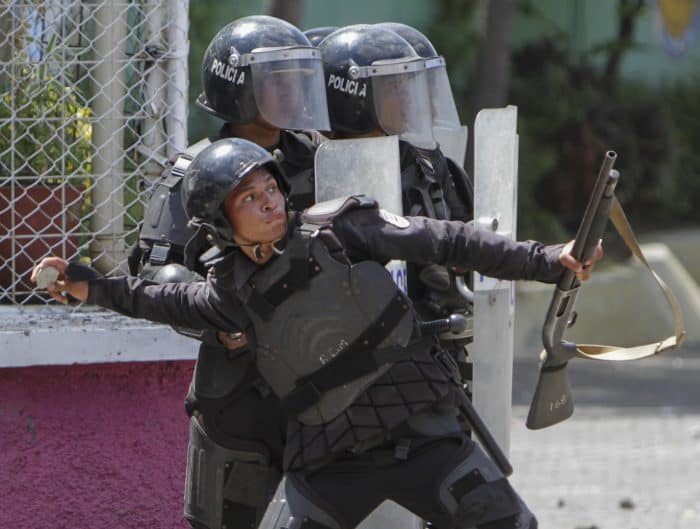
The police and military, once shining examples of professionalism in Central America, now behave more like the former National Guard they replaced the last time Nicaraguans overthrew a dictatorship in 1979.
But this week’s street protests have revealed a chink in Ortega’s armor. Suddenly, his control over the country — and even Sandinismo — is being challenged like never before. Students from universities that have been bastions of Sandinista strength are now leading the pushback against Ortega’s government. Sandinista revolutionaries in the heroic town of Monimbó, the cradle of insurrection in the 1970s, clashed wildly with pro-government forces in a block-by-block street fight on Thursday afternoon.
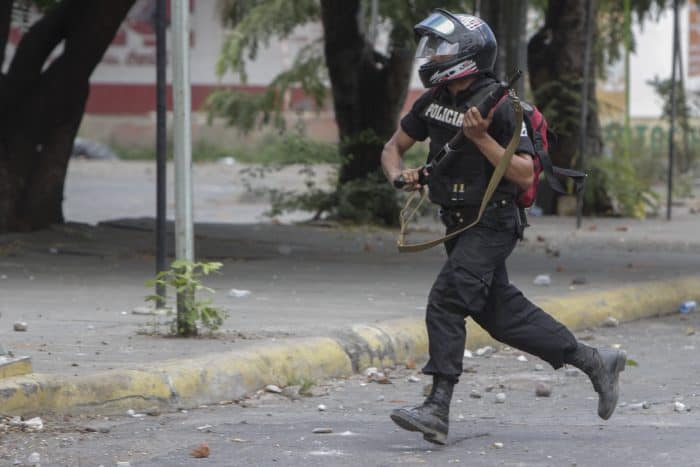
By Thursday night, six pockets of protest had broken out across Managua, and similar protests in half a dozen cities across the country. Students were climbing flagpoles to tear down the ruling party’s ubiquitous red-and-black flags — an act of civil disobedience that was unthinkable just 12 hours earlier.
The situation now threatens to get entirely out of hand. Events are happening fast —almost too fast for the country to fully comprehend. Sometimes history lurches forward after years of stasis. Nicaraguans have lived through it before. Some think it’s happening again.
The protests started in response to Ortega decreeing a new social security tax that disproportionately affects the middle class. But this isn’t isn’t a tax protest anymore. It’s a primal scream. It’s a country that’s reached its limit. It’s a country that’s tired of being afraid, tired of being controlled, tired of the relentless absurdities and abuses of authoritarianism.
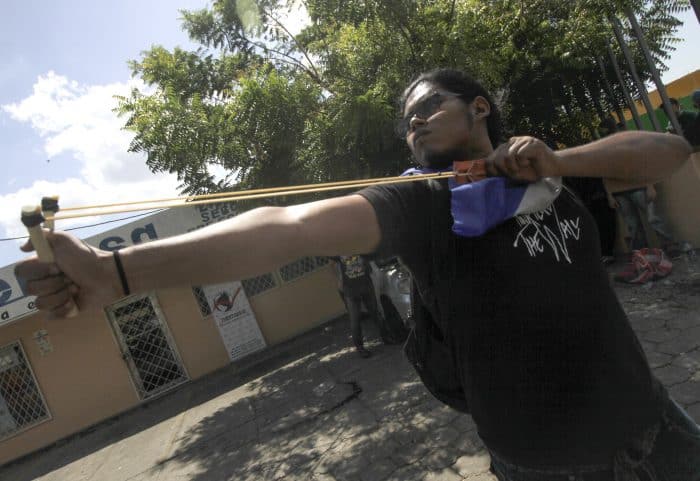
The government’s response — state and paramilitary repression, a media blackout, and rumors of martial law — is only feeding the urgency of this moment. It’s showing Nicaraguans why they are in the streets in the first place.
Where this goes, nobody knows. Daniel Ortega might be the only person in Nicaragua with the singular power to dial it back and restore some semblance of calm. To do so would require some type of reversal or compromise on the tax reform that triggered all this — an unlikely move for the leader of a party whose battle cry is “¡ni un paso atras!” But it might be too late for that. This isn’t just about taxes anymore; it’s the rejection of an entire system of government. It can’t be fixed by presidential decree.
Nicaragua is not Venezuela. As one Sandinista told me last night, “The difference is we’ve had a successful revolution before. Thirty percent of the country is old enough to remember that moment. We know how to do this.”
The students do, too.
I’m telling you, this time feels different.
This piece was originally published by Univision and is republished by permission.
Tim Rogers is Fusion’s senior editor for Latin America, a former Tico Times reporter and the former editor of The Nica Times.





