

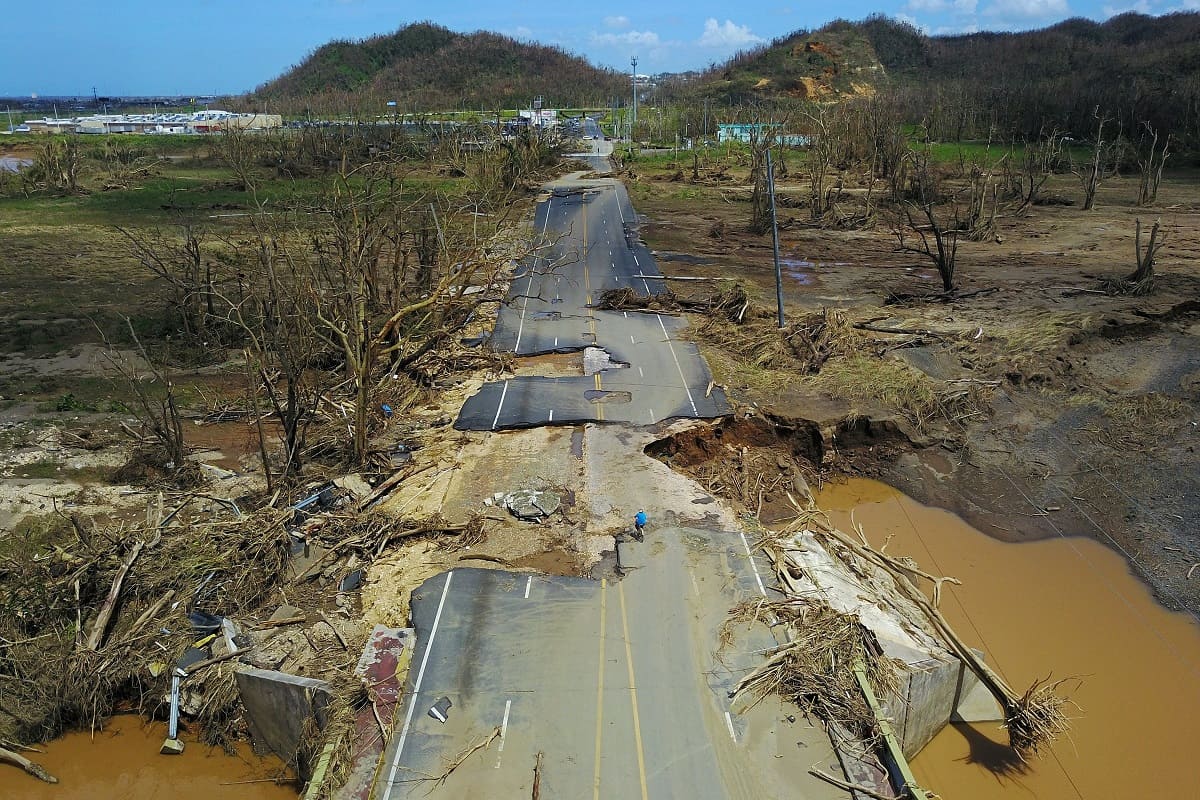
As Costa Rica joins many other nations in looking back upon the devastating 2017 hurricane season, longtime Tico Times contributor John McPhaul reflects on his experience at the heart of Hurricane Maria’s passage through Puerto Rico. Part I of II.
With vicious wind gusts slamming into our apartment, we huddled in the safety of the stairwell, terrified of what would happen when the eye of Hurricane Maria hit.
Fortunately for us, the eye wall passed 15 miles south and Maria spared us the worst of its Category 4 winds, which reached 200 miles an hour.
But no one in Puerto Rico was spared the ravages of Hurricane Maria altogether. The storm knocked out 100 percent of the electrical power, demolishing the transmission lines that traverse the 100-mile by 35-mile island. Maria also knocked out 60 percent of water supplies, serving up what could still turn out to be a humanitarian crisis of untold proportions.
The 1 million residents of San Juan’s metropolitan area, where recovery efforts have been centered, are lucky compared to the 2.4 million people living in outlying municipalities. Across the mountainous island, communities struggled without water, electricity, food or even shelter as the storm ripped apart and blew away wooden houses, leaving people with nothing but the muddy clothes they were wearing.
Voices of Nate: Five first-hand accounts of Costa Rica’s devastating storm
For weeks after the storm, people in the mountains slept under the rain, surviving without food or water. The storm knocked out dozens of sewage treatment plants, resulting in tainted water being pumped into rivers and giving rise to an outbreak of leptospirosis, a water-born bacteria from rat urine. The hurricane’s death toll has reached 55.
In the immediate aftermath of the storm, these stories and everything else going on in the island were obscured in a confused darkness. No one, even the police, could communicate by phone or internet. Access to rural areas was especially limited because of blocked roads and collapsed bridges.
The only telephone network still operating was AT&T, which had shipped in an off-shore generator in anticipation of the hurricane. When the winds died down, I was able to borrow an AT&T phone from a neighbor to call my brother in California to tell him that we were all right.
That first day after the hurricane had passed, we emerged from our house to a scene of utter devastation.
‘Pura vida’ on a mission: Monteverde recovers from Tropical Storm Nate
Fallen trees and branches blocked streets everywhere and the trees that remained standing were completely shorn of leaves. Puerto Rican environmental consultant Mickey Ray estimates that the storm downed between 1 million and 3 million trees and damaged 5 million more.
As soon as the wind stopped, neighbors on our street got busy clearing it of downed trees and branches, in a scene repeated on virtually every street throughout the island. On our street, even a grandmother ably wielded a chainsaw to cut up trees and branches that were then moved to the side of the road by others.
But once the trees were cleared, it didn’t mean you could get anywhere. Puerto Ricans had pumped the gas stations dry in anticipation of the hurricane.
Huge lines formed in front of gas stations rumored to be about be refilled by trucks that never came. The gasoline truck drivers had the same communication challenges as everyone else and were in mere survival mode, unable to get to work.
When they finally did start work after several days, they had to first deliver diesel to hospitals in urgent need of fuel for their generators. A Total gas tanker truck needed a police escort as it sped through a main San Juan street on the way to a hospital.
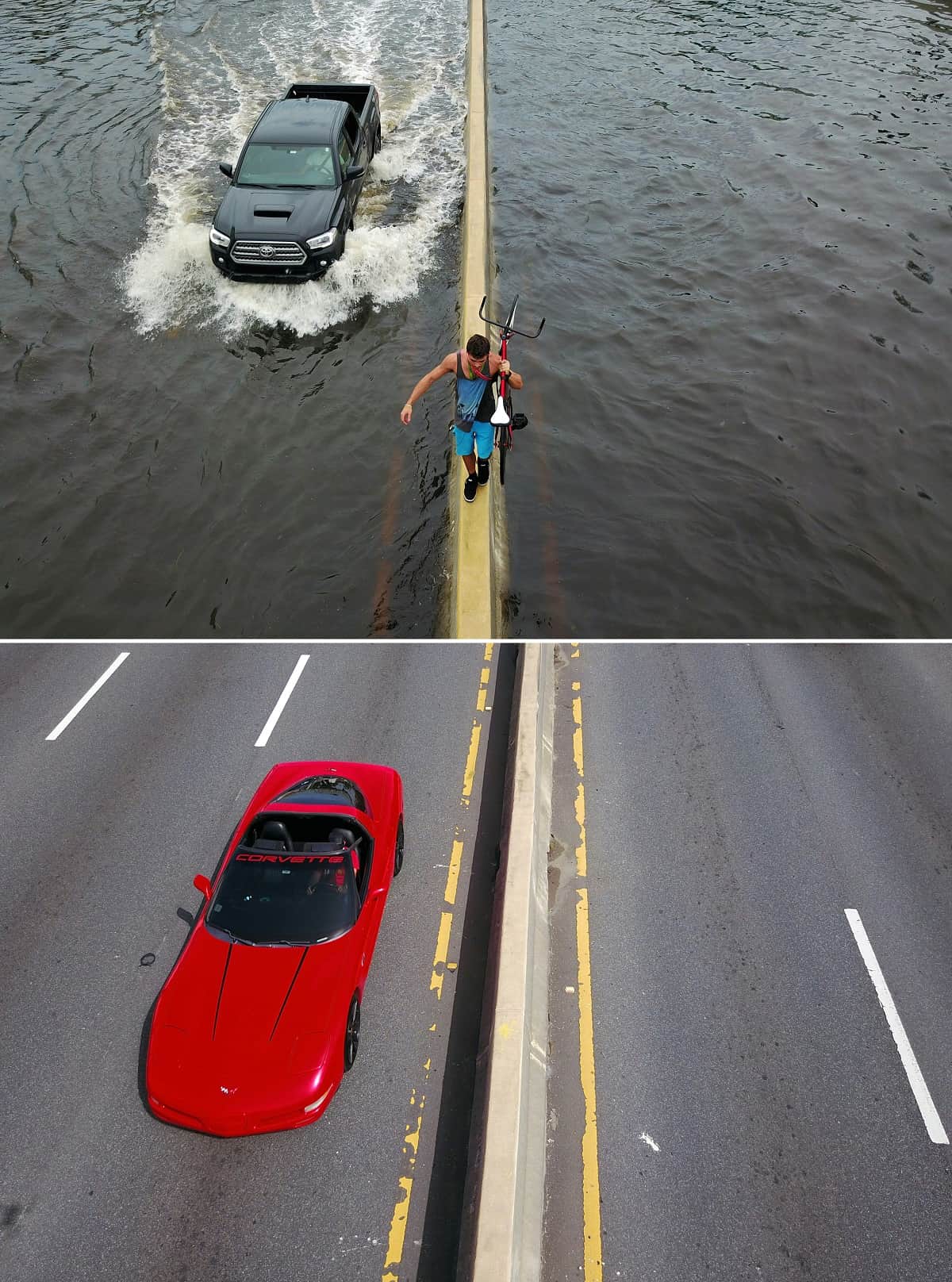
After three or four days, gasoline finally reached the general public. However, lines at gasoline stations stretched up to eight hours, and gas often ran out before everyone was served. Special lanes were established at designated gas stations for government officials and reporters, guarded by police against the possibility of frayed tempers, with waits of less than a half an hour to fill up.
Lines also formed at supermarkets, which had run short of many basic supplies because the storm had knocked out ports around the island.
Now, more than two months after the hurricane struck, at least a semblance of normalcy has returned, at least to San Juan.
Lines have disappeared from gasoline stations and supermarkets. Shopping centers are jammed packed, as much with people seeking out a sense of normal life as doing any significant shopping. Universities have reopened after undergoing repairs, and schools have reopened.
But the storm exposed the vulnerability of the 1 million people who live below the poverty line in Puerto Rico, many in rural areas outside of municipality centers. For them, life may never be the same.
John McPhaul is a dual U.S.-Costa Rican citizen, born in San José. He wrote for The Tico Times for many years and now works at the San Juan Daily Star.Read more from John in Part II, coming Thursday.





