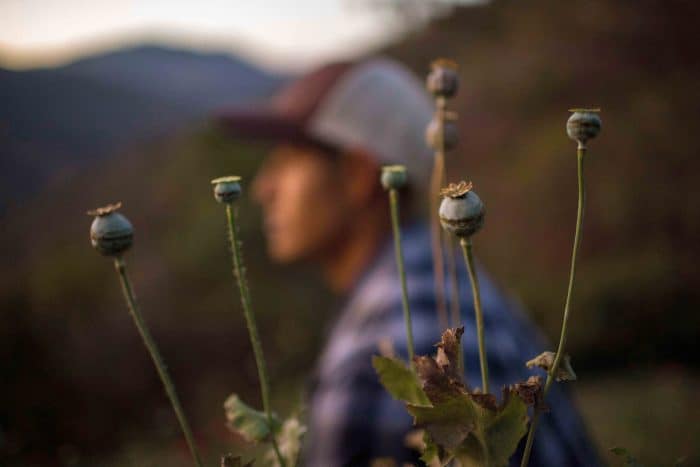
GUERRERO STATE , Mexico – Deep in the southern mountains of Mexico, the cicada-like “tsk-tsk-tsk” of a water sprinkler broke the eerie silence as it sprayed a small parcel of opium poppies.
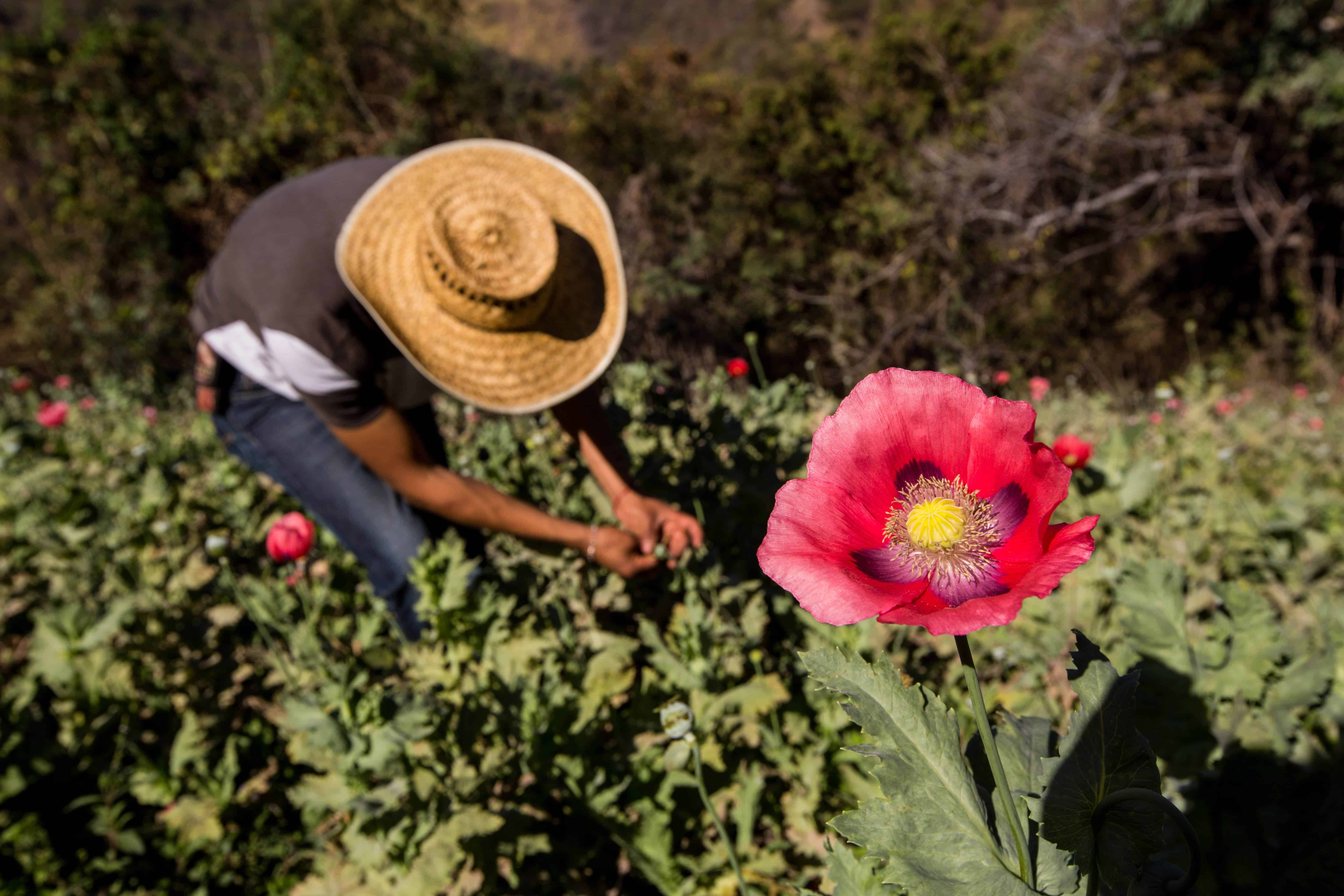
Wearing a straw hat, a polo shirt and jeans, Jorge slices the bulbs with a razor blade, releasing a sticky paste — the raw material of a growing heroin epidemic feeding addicts in the United States and fueling violence in Mexico.
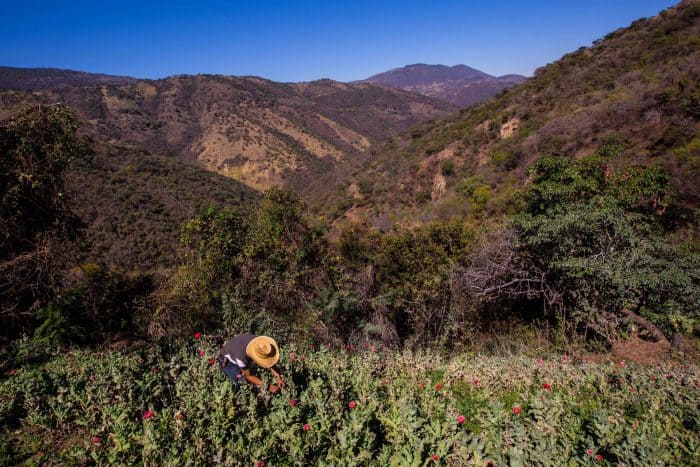
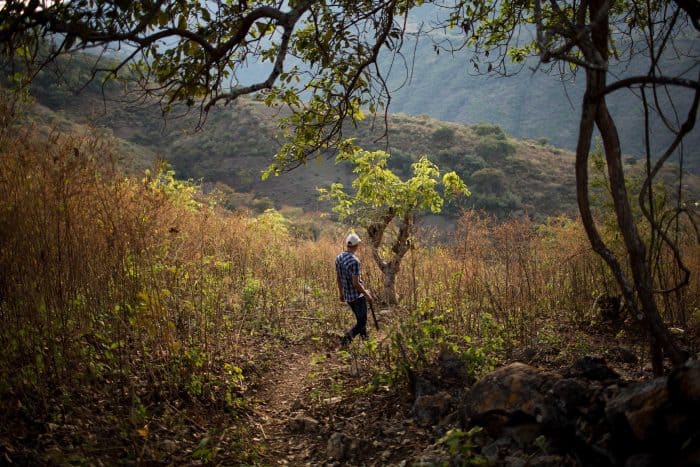
Jorge, 23, has two plots of land that he reaches on a donkey, a half-hour ride from his small home in the remote mountains of Guerrero state, a region torn by turf wars between drug gangs.
Some 80 other people, including women and children, live in the impoverished community, where each family tends to its own field of poppies, a much more lucrative option than legal crops.
The community has no town square or medical services, but there is a chapel. Children walk an hour to other communities to attend school. The few corn crops they grow are for self-consumption.
One recent night, gunfire was heard in the distance. But Jorge was unfazed. Such is life in the mountains of Guerrero.
“We grow [opium poppies] because there is nothing else. We sow it out of necessity,” said Jorge, who declined to give his full name for security reasons. AFP also withheld the community’s name for safety reasons.
“Although people say it’s a drug, for us it’s normal. It’s like growing corn, tomatoes or chile,” said Jorge, as he worked on his 1,600-square-meter field on a steep hill.
Turf wars
While residents refused to identify the gang to which they sell, Guerrero is dominated by two criminal groups, the Guerreros Unidos and Los Rojos drug cartels.
Turf wars have transformed Guerrero into a dangerous region scarred by disappearances and the highest murder rate in Mexico, with 56.5 homicides per 100,000 inhabitants in 2015.
“A large part of the violence has taken place in this part of the country in recent years. It is generated by the production of opium poppies,” Roberto Campa, the deputy interior minister for human rights, told AFP.
Guerrero is the state where 43 students were abducted by crooked police officers in 2014 and handed over to the Guerreros Unidos gang, which allegedly confused them with Rojos, killed them and incinerated their bodies, according to prosecutors.
Authorities are also investigating whether the students were attacked because they may have inadvertently stolen a bus filled with drugs.
While opium poppies fuel violence in Mexico, heroin overdoses have skyrocketed in the United States, from 1,842 in 2000 to more than 10,500 in 2014, according to U.S. government figures.
Jorge’s field produces around two to three kilograms of the brownish gum every three months. A kilo sells for between 14,000 and 17,000 pesos ($760 to $925), depending on the availability of the product.
Sometimes, he pays someone up to $16 per day to help him slice the bulbs and gather the gum. The drug traffickers come to the mountain communities to buy the product.
Alejandro Hope, a former Mexican intelligence officer, said 15 to 25 kilograms (33 to 55 pounds) of gum are needed to make one kilogram of heroine. The kilo of “black tar” heroin is then sold for $50,000 or $60,000 in the United States.
Gerardo Rodríguez, a national security expert at the University of the Americas in Puebla, said Mexico is the leading exporter of heroin to the United States.
Drug cartels have built sophisticated labs to transform the raw material into heroin with high levels of purity, thanks to chemical precursors imported from China and India, he said.
“This has had an impact on the drug’s price in the United States. Heroin and other opioids has fallen because the quality has improved and it has flooded the U.S. market,” Rodríguez said.
Related: White House seeks nearly $1.2 billion for drug prevention, treatment, overdose response
Growing fields
There are no official figures on the amount of opium poppies grown in Mexico, but drug seizures indicate that production is increasing.
The military seized 60 kilograms in 2000 and it rose in subsequent years, reaching more than one ton in 2014, according to Defense Ministry figures obtained by AFP.
Antonio Mazzitelli, the Mexico representative of the U.N. Office on Drugs and Crime, said authorities destroyed 20,000 hectares between 2014 and 2015, showing an increase in areas of cultivation.
Back in Jorge’s village, residents said their community has avoided bloodshed because it is free of gang disputes.
Jorge, who is married and lives in the small house with his parents, said his 56-year-old father worked in opium poppy fields as a child.
“In the mountains, you learn from a very young age, before you go to school,” Jorge said.
“Many young boys like me didn’t think about studying. I only thought about growing opium poppies, buying a new car.”
Sometimes, he said, federal forces fumigate the region, making farmers lose some of their illicit investment, but the business is not really interrupted.
“The government is political. At times, they let it go; other times, they don’t,” Jorge said. “They know that they can’t completely destroy the opium poppy.”