

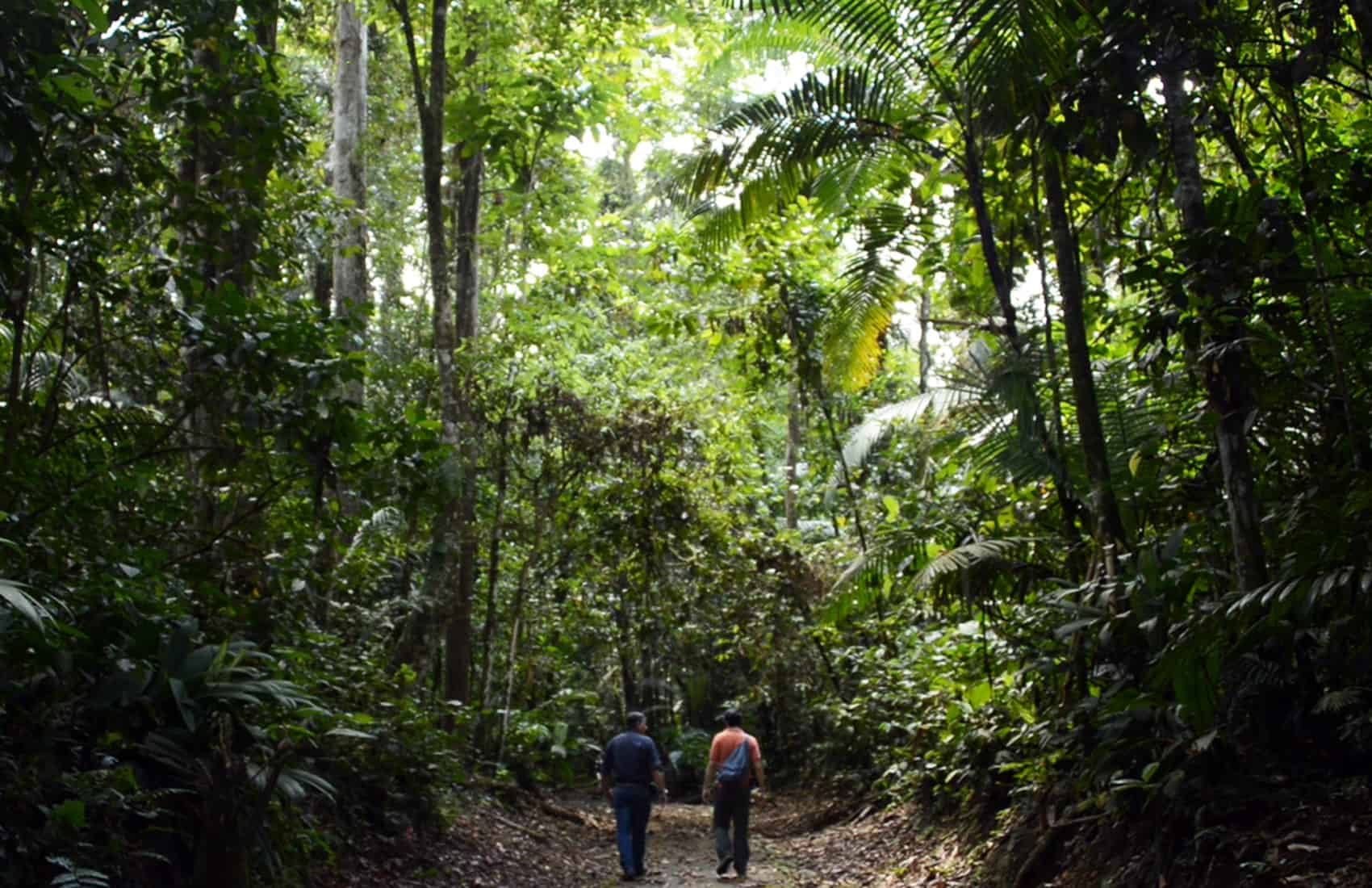
The future of restoring tropical forests should not be exclusively in the hands of governments, argues Rebecca Cole, director of three biological stations in Costa Rica run by the Organization for Tropical Studies (OTS). The ecologist believes private institutions and landowners could also have a stake in those efforts.
“There has to be a change in the mindset,” Cole told The Tico Times.
She suggested the main challenges include securing funds for restoration and providing market incentives that are accessible to individual landowners. While government initiatives in Costa Rica do provide financial compensation for protecting forests, those programs often lack enough funding.
“A lot of small-scale farmers just don’t have access,” Cole said. “They would like to improve on how to manage their land in a more sustainable way, but they can’t get over that barrier of investment that they need to change their methods of production.”
The restoration expert — who has a Ph.D. from the University of California in Santa Cruz — joined the First Latin American Congress on Sustainability, Ecology and Evolution (SEE) held Sept. 26-29 in Parque Viva, Alajuela, to discuss challenges of recovering rainforests.
She has worked to find ways to restore degraded lands in Costa Rica and is also studying how reforestation could improve the livelihood of local communities.
“Biodiversity is directly linked to the number of trees in the landscape,” she said. “More trees equals more biodiversity and more carbon sequestration. Every tree counts.”
Cole grew up in a small agricultural community in the Coto Brus canton of Puntarenas, where she saw firsthand the consequences of deforestation and the challenges of the sustainable land use.
Compared to other tropical countries where Cole has worked, Costa Rica is doing well, she admitted.
“It is the easiest place to actually put forward ideas for conservation, for sustainability and for restoration,” she said. “Having said that, there’s a lot that we can improve since much of the country’s land is deforested and highly degraded.”
Las Cruces
One example is the Biological Station Las Cruces, located near the Panamanian border. At the beginning of 2016, Cole began working as the director of Las Cruces, an area embedded in a mountainous tropical forest and surrounded by agricultural landscape.
According to Cole, the forest cover in Las Cruces has been dramatically reduced in the last 50 years.
“I would say that 75% of the land that has been cleared is at some stage of degradation, and much of it in a very highly degraded stage such that production is no longer possible,” she said. “The only land-use option is cattle grazing very much below a viable level for landowners.”
One factor that hinders the restoration efforts by land-owners, Cole explained, is the need to receive long-term financial compensation rather than a one-time offer.
“Our role there is to look at how to restore degraded land,” she said. “We’re working on biological corridors and sustainable agriculture. We also do environmental education and outreach.”
Fostering community-level engagement
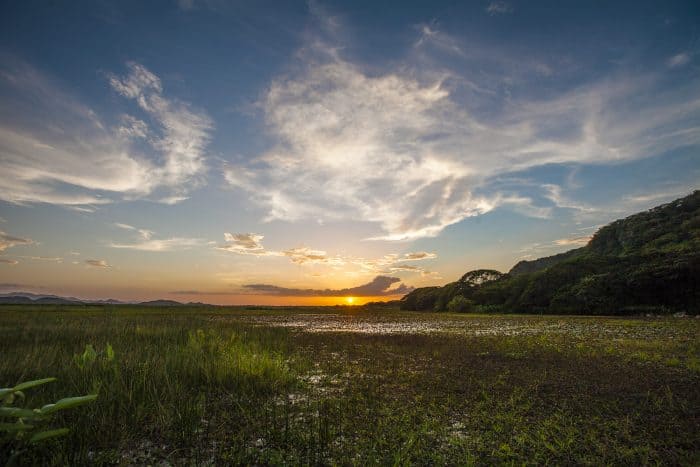
The Organization for Tropical Studies is a non-profit consortium of nearly 60 universities, colleges and research institutions worldwide, with operations in three countries and research stations and education programs in Costa Rica and South Africa.
It has been the world’s leading institution in the study of tropical biology, with more than 360 courses in tropical ecology, conservation and global health training more than 10,000 students from more than 70 countries.
As a new director of the three stations run by OTS in Costa Rica – Las Cruces, La Selva and Palo Verde – one of the things to which Cole aspires is to foster engagement on a community level.
“I want to do a much better job at outreach to our local communities and have a better environmental education program,” she said.
La Selva in Sarapiquí is the largest reserve, with 1,600 hectares located in the lowland Atlantic rainforest in northern Costa Rica. It was created 50 years ago and has fostered hundreds of scientific investigations resulting in around 3,000 papers about climate-change impacts and basic research in the tropics.
Apart from providing scientific information, Cole’s team has been working to create partnerships with local villages to facilitate their search for funding in order to shift to a more sustainable way of managing their land.
“Our mission is to support scientific research in the tropics to carry out conservation and have an influence on policy surrounding sustainable use of tropical ecosystems and education,” Cole said.





