

No menu items!

COSTA RICA'S LEADING ENGLISH LANGUAGE NEWSPAPER

HomeLatin AmericaCentral AmericaU.S. ends protected status for 200,000 Salvadoran immigrants

U.S. ends protected status for 200,000 Salvadoran immigrants

WASHINGTON, DC – The U.S. government announced Monday the end of a special protected status for about 200,000 Salvadoran immigrants, a move that threatens with deportation tens of thousands of families with children born in the United States.

Homeland Security Secretary Kirstjen Nielsen announced the end of the “temporary protected status” (TPS) granted to Salvadorans already in the United States in 2001, when two major earthquakes rocked the Central American country.

They were given 18 months to leave or be deported, which officials said is enough time for a legislative solution to be crafted by Congress to allow them to stay.

“Only Congress can legislate a permanent solution addressing the lack of an enduring lawful immigration status of those currently protected by TPS,” the Department of Homeland Security announced.

Part of a broader crackdown on illegal immigration by President Donald Trump, the move comes after 59,000 longtime resident Haitians and 5,300 Nicaraguans were stripped of similar protections late last year, after having been allowed to set deep roots inside the United States for decades.

Democrats in Congress are also fighting to protect the right to stay inside the United States of 690,000 young immigrants known as “Dreamers,” people who arrived in the country as children.

Trump has said he will back a compromise on the Dreamers if Congress budgets $18 billion to build a wall along the border with Mexico.

The government of Canada indicated it wants to “make sure we’re ready” for a potential influx of Salvadorans, in an effort to prevent the kind of massive flooding of the border that took place after the U.S. ended protections for Haitians.


‘My life is here’

Many, if not most, of those shielded by TPS had originally entered the country illegally or overstayed visas, but the program had effectively allowed them to settle down without the constant fear of deportation.

Previous governments rolled over the protected status with little debate, but Trump has pursued a tougher “law and order” approach to the issue.

For TPS beneficiaries, the decision was a thunderbolt.

“My life is here,” said Minda Hernandez, a 48-year-old housekeeper from Long Island who fled conflict in El Salvador 20 years ago – leaving a one-year-old child behind.

“This is where my home is, where I pay my taxes. I am happy here – even if I work myself to death,” she said.

VIDEO: New Costa Rican documentary explains forced Central American migration

Now she fears most for her 16-year-old son, who was born in the United States.

“There are so many gangs and crime back there,” she said. “But how could I leave him here alone?”

In San Salvador, President Salvador Sanchez Cerén avoided criticizing Washington and focused on the 18-month grace period.

Cerén’s administration “considers this decision to be a recognition of the contribution of our compatriots who hold this migratory benefit, who are an important workforce in that country,” his offices indicated.

Cerén’s government has grown closer to the United States, and was one of only eight countries at the United Nations to support the U.S. move to recognize Jerusalem as Israel’s capital in December.

Impact on U.S. and Salvadoran economies 

Without a change in the law, some 195,000 Salvadorans will be forced to leave the country by Sept. 9, 2019, in what amounts to one of the Trump administration’s most substantial moves yet to enforce its crackdown on illegal immigration.

This impacts large communities of deeply-rooted people in California, Texas and around the U.S. capital – more than 135,000 households– according to the Center for Migration Studies.

Nearly all have jobs, over a quarter own homes with a mortgage, 10 percent are self-employed and about 10 percent have married US citizens.

They also have a significant impact on the Salvadoran economy: remittances from the more than one million Salvadorans across the United States account for a large chunk of Salvadoran GDP.

“We are not criminals. We came here to realize the American dream, which unfortunately we cannot obtain in our country,” said Hugo Rodriguez, a 48-year-old Salvadoran cook in Brooklyn’s celebrated Peter Luger Steakhouse. “We have succeeded due to our work… We are a part of the economic engine of this country.”

The decision will also affect nearly 193,000 children of Salvadorans born inside the United States, who have citizenship rights, unlike their parents.

Washington union activist Jaime Contreras, who arrived from El Salvador in 1988 and earned his citizenship, called the DHS decision “shameful” and “inhumane.”

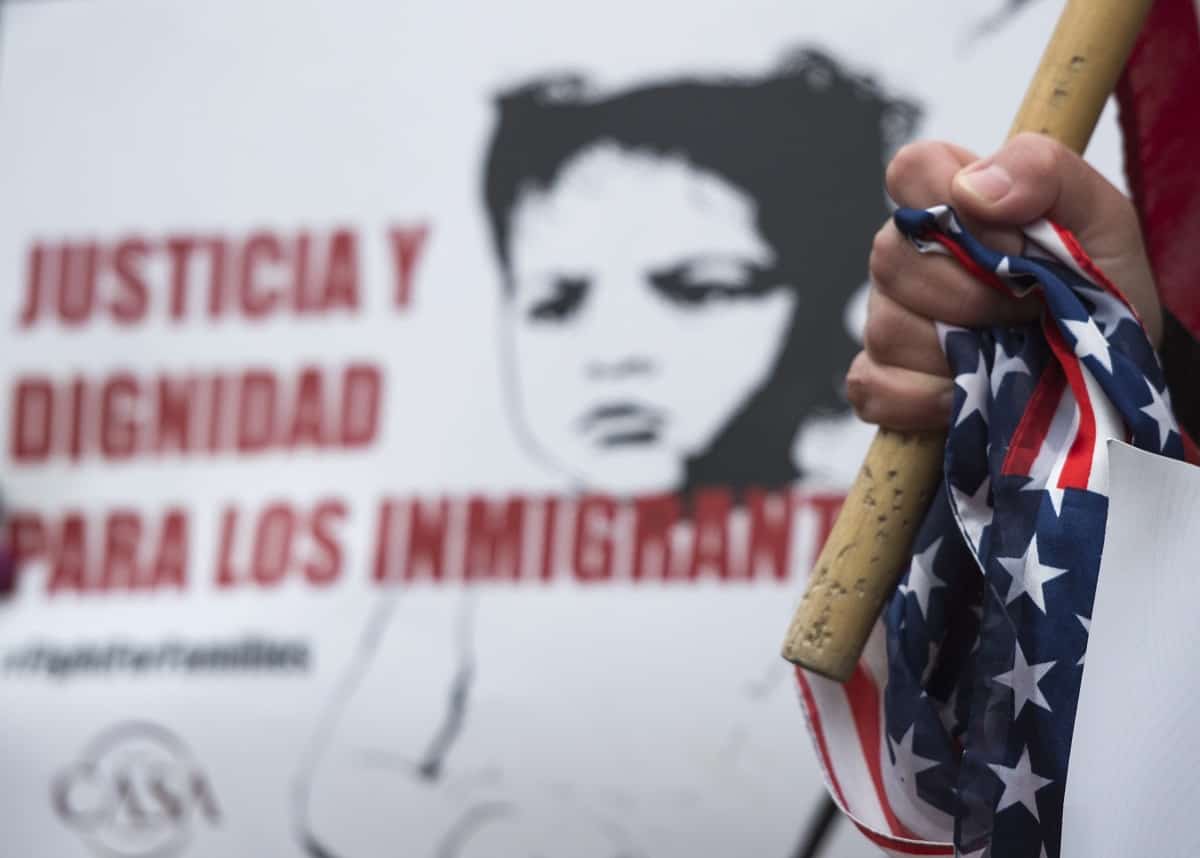
“We have 18 months to pressure Congress and tell them it’s time once and for all to give TPS holders a path to citizenship,” he said during a small protest outside the White House immediately following the announcement.

“Today’s decision is a poignant reminder that we have an anti-immigrant president who turns his back on hardworking families and insists on governing by fear and intimidation,” said Nevada Senator Catherine Cortez Masto.

Trending Now

WestJet Expands Canadian Access to Costa Rica with Vancouver-Guanacaste Service

WestJet started its direct service from Vancouver to Costa Rica yesterday, landing with 153 passengers at Guanacaste Airport. This move broadens travel options between...

Mexico’s Renata Zarazua Carries Regional Hopes into Australian Open 2026

As the tennis world gears up for the 2026 Australian Open, set to kick off on January 18, Latin America stands ready to make...

Iron Maiden Set to Rock Costa Rica Again in 2026 Tour

British heavy metal icons Iron Maiden have locked in their return to Costa Rica, delivering a major win for local fans. The band will...

Costa Rica Faces Windy Weather from Cold Front No. 6

Costa Ricans faced brisk winds and intermittent showers when getting to work this morning, as Cold Front No. 6 positioned itself over the central...

WSL Yellow Alert at Nazaré: What It Means for Latin American Big-Wave Surfers

The World Surf League has activated a yellow alert for the Tudor Nazaré Big Wave Challenge at Praia do Norte in Portugal. Incoming Atlantic...

Costa Rica’s President Attacks Opponents After He keeps His Immunity

Costa Rica’s President Rodrigo Chaves lashed out at opposition lawmakers after Congress rejected a request to strip him of immunity, a step that could...
Costa Rica Coffee Maker Chorreador
Costa Rica Travel Insurance
Costa Rica Travel

Latest News from Costa Rica


