

We all know how exceedingly fortunate we are to live in or visit such a diverse and stunning place as Costa Rica. So we go to the beach to enjoy. We drink some bottled water, a few sodas and perhaps more than a few beers. We aren’t barbarians. We all take the bottles to a trash can or back to the hotel. But we generally leave them where we vacation, along with sunscreen bottles and whatever other waste we produce.
Completely normal behavior but when multiplied by millions of tourists we have to ask, where does all that waste go? The small towns that host us have been forced to deal with the influx of waste from tourism, often without municipal experience or proper funding. Many tourists and residents want to participate in recycling and other sustainable practices but there are no well-organized and publicized systems in place.
But doesn’t Costa Rica have waste management laws, you may be asking? Yes, the Integrated Waste Management Law, No. 8839, was passed in 2010 and requires all municipalities to formulate and enact waste management and recycling plans.
Nearly all 81 cantons now have such plans, but many face difficulties executing them. Vacation hotspots face greater challenges, as many are located in isolated areas, with more tourists than local residents, but not included in municipal waste management plans.
Others have very basic strategies, such as once-a-month recycling drop-off points, which many people cannot participate in due to transportation or time constraints.
Though we should expect more, that is the reality of waste management in Costa Rica. If we want to see improvements, we will have to take it upon ourselves to facilitate change.
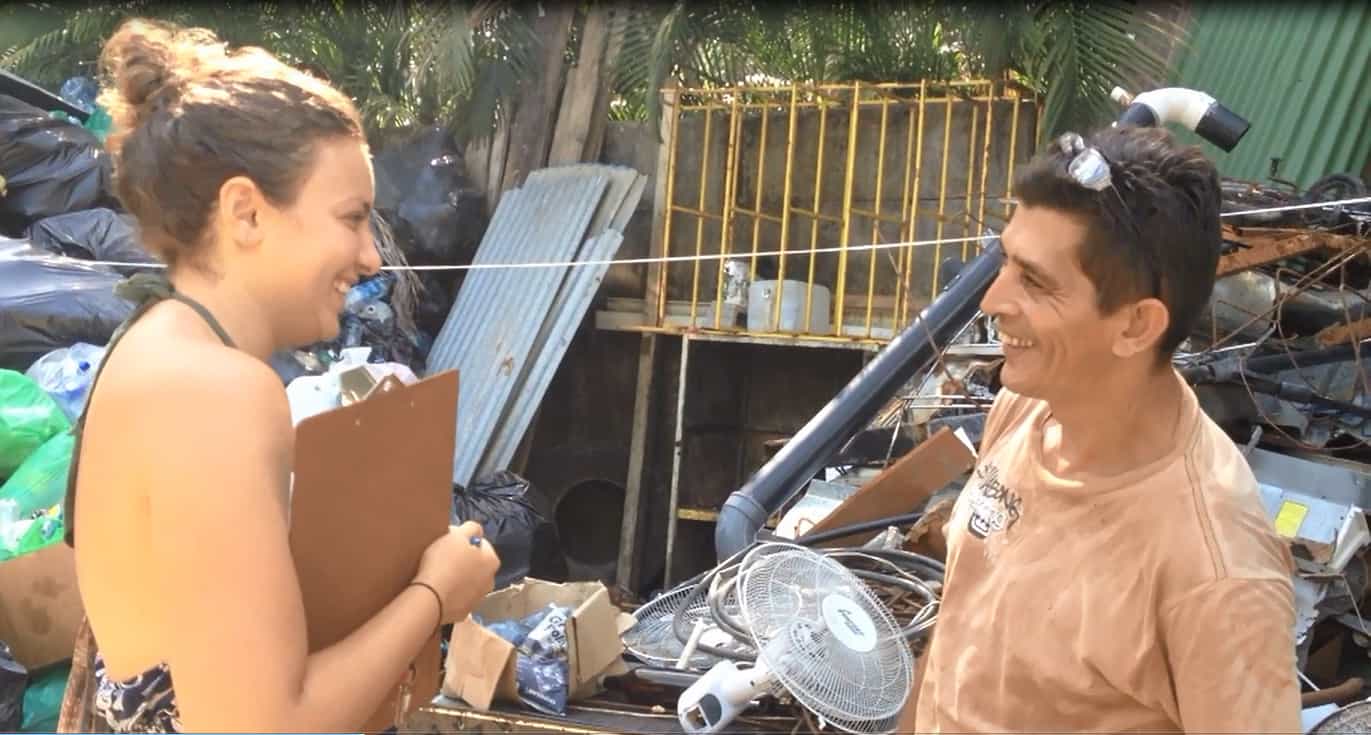
I have seen the problems firsthand while conducting an ongoing study of waste and water management in the beach towns of Mal País and Santa Teresa. Located on the tip of the Nicoya Peninsula, they have faced growing waste management issues since tourism began to increase in the late 1990s.
The very beaches that residents rely on for most of their economic activity through tourism are jeopardized by waste from littering, bags of trash that are not collected and materials that wash up on shore. To compound the issue, the nearest dump in Cóbano has been condemned and ordered to be shut down for the last two years but remains in use.
As I have mapped contamination and gathered input from local stakeholders, it has become clear that a coordinated effort to facilitate waste management at the municipal level is necessary if the area is to continue attracting tourists.
Nicoya Peninsula Waterkeeper, a local NGO, and the local Chamber of Tourism took the lead in coordinating a public-private waste management effort. In order to provide the recycling center and collection truck needed to scale up local recycling initiatives, Waterkeeper introduced the environmentally responsible company Bionic into the solution mix.
Bionic produces yarn from reclaimed plastic that is used in clothing such as board shorts. They have recently begun collecting not only post-consumer plastic waste but ocean waste from four local towns.
A partnership between the municipality, the NGO and the company generated a local recycling collection and processing program to reduce landfill inputs by providing a solution that locals and visitors were looking for.
In other areas, such as Monteverde, community-led initiatives are addressing waste collection in an effort to maintain the natural beauty that attracts visitors. The Monteverde Community Fund worked with the municipality to construct waste and recycling mini collection centers in neighborhoods to increase convenience and participation while eliminating the problem of trash entering the environment.
These initiatives make it clear to me that we have to be the change we wish to see in the world, as Gandhi eloquently put it. \In the global economy, international tourists, and increasingly locals, can take their business anywhere in the world. Sound waste management is a minimum threshold to attract tourists and provide the constitutionally guaranteed right to a healthy natural environment for citizens.
If your community is not collecting recycling, as nearly none do, you can meet with the municipality or local organizations to see what the barriers are to help facilitate solutions. You can pressure legislators to enact policies that encourage everyone to use less plastic, such as the bill Costa Rica’s legislature is reviewing that would require businesses to charge customers for plastic bags.
Last week the Paris Agreement to reduce greenhouse gases received the ratifications necessary to come into force. We are witnessing the international community finally addressing climate change head on.
Isn’t now our responsibility to facilitate the same type of accountability in our communities to meet the global goal of reducing climate change? The most effective way to manage waste is to not produce it. We can all start at home by questioning our own consumption patterns and changing old habits.
Then take that mentality on vacation with us. Find hotels that can tell you how they deal with your waste and water. If you do not want to conduct your own pre-trip investigation, the Costa Rican Institute for Tourism (ICT) has a Certification for Sustainable Tourism (CST) which awards up to five leaves for sustainable practices, including waste and water management. The website gives details on participating sustainable hotels, tours and restaurants in the region you intend to visit.
It’s a big ask to consider the impact of your waste when trying to get away from the nagging issues of everyday life. But we can be conscientious creatures, even on vacation.
Our responsibility is especially important on holiday since that is precisely when we bring our consumption habits to sparsely populated, less contaminated beaches and mountains. It is up to us as consumers of goods and tourism services to care about what happens to our waste if we want this spectacular spot on the planet to remain that way.
Mary Little is a professor of Environmental Ethics and Development at the Center for Sustainable Development Studies in Atenas, Costa Rica.





