

See: It’s time to end the war on drugs
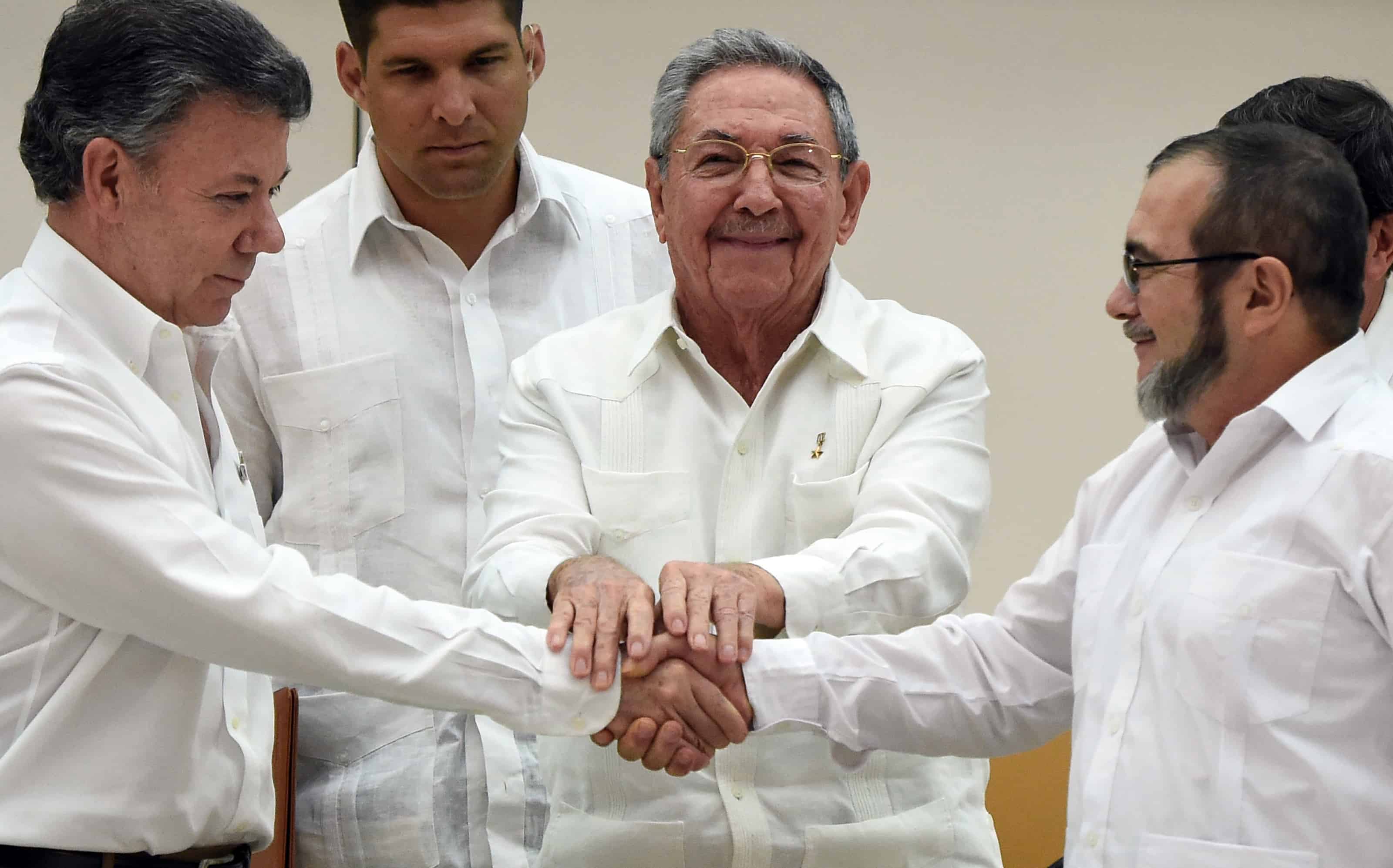
BOGOTÁ – Colombians are close to bringing to an end the oldest and only remaining armed conflict in the Western Hemisphere. After more than five years of negotiations with the Revolutionary Armed Forces of Colombia, we can say that we have reached an irreversible phase that will put an end to more than 50 years of a cruel and costly war.
All of my predecessors over the past five decades attempted to make peace with the FARC, the largest and oldest guerrilla army to have emerged in Latin America. They all failed. So why has this peace process proved successful?
Above all, this has been a well-planned and carefully executed process that began when we achieved certain conditions. First, we had to change the correlation of military forces in favor of the Colombian state. Second, we had to convince the FARC’s leaders that it was in their own personal interest to enter serious negotiations and that they would never achieve their objectives through violence and guerrilla warfare.
Last but not least, we implemented a radical change in our foreign policy, which led to an improvement in our relations with our neighbors and the rest of the region. This facilitated their support of our initiative and thus the beginning of the Colombia peace process.
Secret negotiations
We started secret negotiations almost four years ago to establish a limited and focused agenda and clear rules of procedure (the absence of which was a major stumbling block in previous negotiations) that would allow us – assuming we reach an agreement – to end the conflict. This was the first time that the FARC had agreed to such a process.
The outcome of this phase was a five-point agenda: Rural development, political participation, drug trafficking, victims and transitional justice, and lastly the end of the conflict, which includes disarmament, demobilization, and reintegration – commonly known as DDR.
Following the signing of a framework agreement in Oslo in October 2012, we began the public phase of negotiations in Cuba. The host country and Norway acted as guarantors, while Venezuela and Chile have accompanied the process. Later on, the United States and the European Union appointed special envoys to the talks.
From the start, a basic rule of the negotiations has been that nothing is agreed until everything is agreed. To date, we have settled all items except DDR. To avoid past mistakes, we studied why previous peace negotiations in Colombia had failed, as well as lessons from peace negotiations elsewhere.
We also selected a group of international advisers with hands-on experience in peacemaking to help us navigate through the difficult waters of this process. I can now say that making peace is much, much more difficult than waging war, and I have done both extensively as Colombia’s Minister of Defense and now as President.
This Colombia peace process is groundbreaking in several ways. We have placed victims (more than 7.5 million in our case) and a comprehensive system to guarantee their rights at the center of the solution to the conflict. We have also agreed to create a special jurisdiction and tribunal to guarantee that those responsible for international war crimes are investigated, judged, and condemned as stipulated in the Rome Statute of the International Criminal Court. This is the first time that a guerrilla movement has agreed to disarm and be subject to transitional justice.
An impossible war on drugs
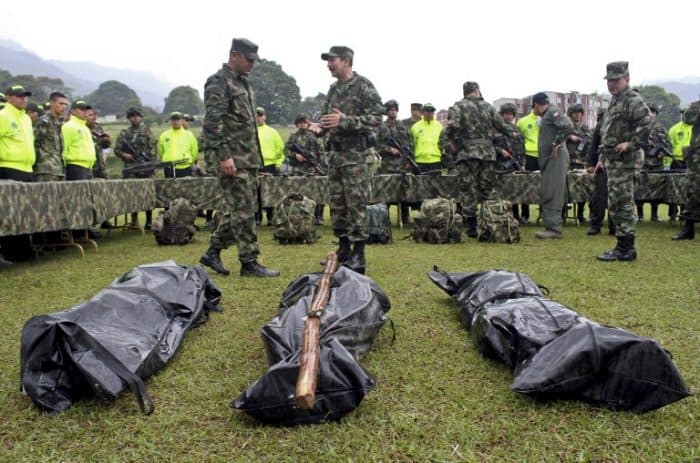
Peace in Colombia will bring real benefits to a world rife with armed conflicts and longing for a success story. Despite being the country that has paid the highest cost in the war on drugs – a war that has proven impossible to win – we are still the world’s leading exporter of cocaine. This unpalatable fact is due mainly to the guerrillas, who have continued to protect their main source of income.
See: Colombia is again the world’s top coca producer. Why that’s a blow to the US
Peace will change this, because the FARC has agreed to help in the substitution of legal crops for coca production. Without the threat of attack by the guerrillas, our brave soldiers, policemen, and civilian eradicators can do their job without the threat of snipers or landmines.
In terms of the environment, the amount of oil spilled into our rivers and oceans by terrorist attacks on our pipelines is calculated to be more than four million barrels over the last two decades. That is equivalent to 14 times the volume spilled by the Exxon Valdez. Furthermore, in a country that has the richest biodiversity in the world per square kilometer, close to 4.4 million hectares of rainforest have been destroyed because of the conflict. All this can be stopped – and, I hope, reversed – with the end of the conflict.
That is why we Colombians have been fortunate to count on the support of the region and the world. Today, there is not a single country that does not back our peace process. Proof of this was the resolution submitted to the United Nations Security Council, which unanimously approved an international mission to verify and monitor DDR.
Despite traditional spoilers, mostly of an internal nature, many of whom oppose the process for political reasons, I am confident that we will put this conflict where it belongs – in the history books. Reshaping the reality around us is our duty to future generations. When we reach an agreement, when we stop killing one another after a half-century of war, we will remove a heavy burden that has stalled our progress and finally enjoy the opportunity to write a new chapter of prosperity and modernity for our country.
Juan Manuel Santos is President of the Republic of Colombia.
© 2016, Project Syndicate. See: www.project-syndicate.org





