

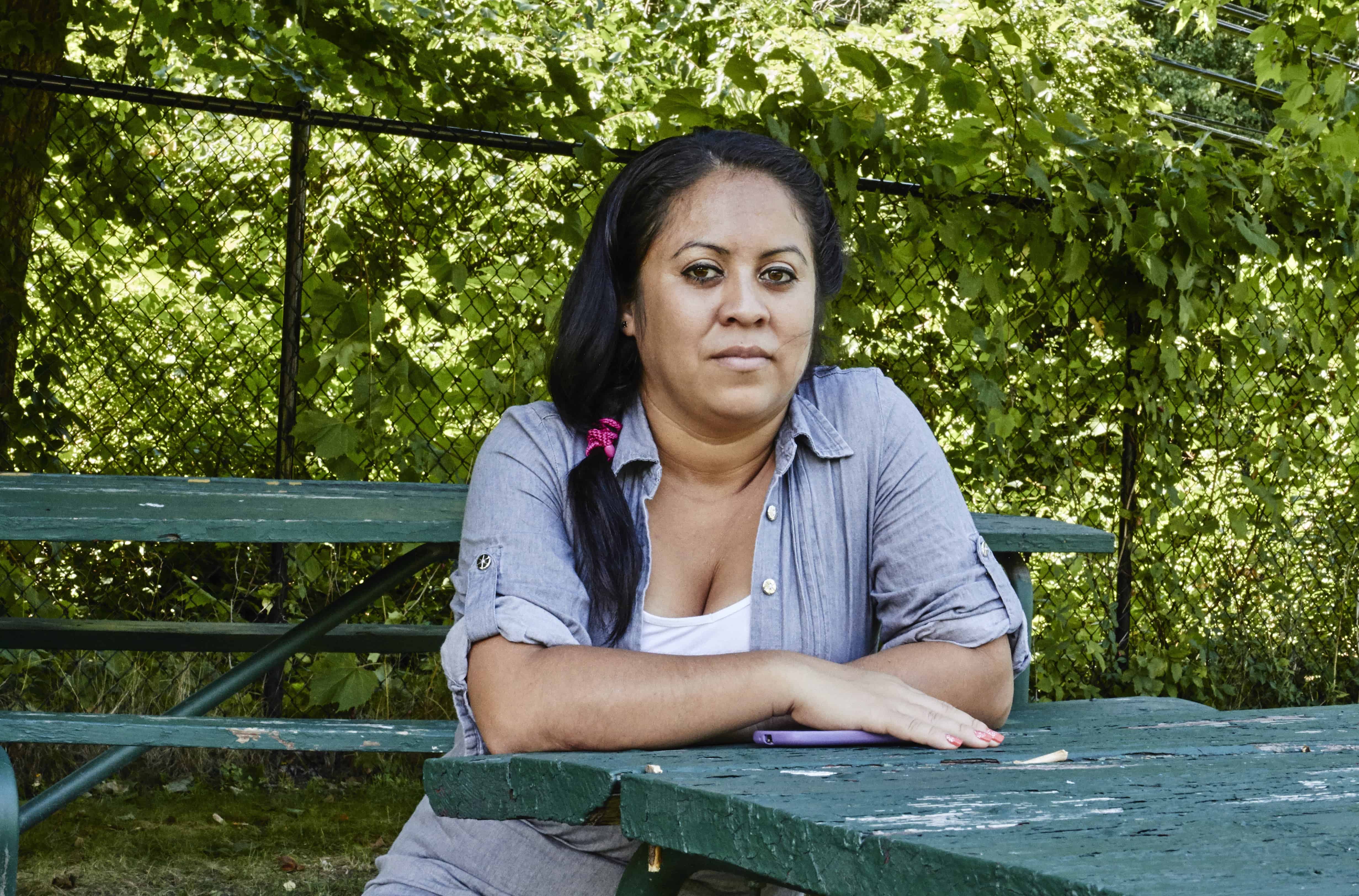
WASHINGTON — Late last year, Norma — the wife of a police officer from El Salvador — was abducted by four members of the M18 street gang, taken to a nearby cemetery and raped repeatedly.
“They took turns. They tied me by the hands and stuffed my mouth so I wouldn’t scream,” Norma said, adding that when it was over, “they threw me in the trash.”
After the vicious attack, Norma went to live with her aunt and uncle in another city; she changed her phone number and never left the house. But the M18 gang continued to threaten her and her children. Having no other option, she and her husband decided she should leave El Salvador. Norma fled through Mexico with a coyote, or human smuggler.
In Gloria’s case, the victim wasn’t her, but her 13-year-old grandson. She said members of an armed criminal group kidnapped him.
“When we finally found his body, it was at the morgue,” she recalled. “They had cut his head off, tied his hands and feet, and cut him all over.”
Complaining to the authorities in these countries is often useless.
Natalia, a native of the Mexican state of Michoacán, went to police after masked men broke into her home, abducted her common-law husband and left in a federal police vehicle. A forensics official eventually showed her a tortured body, telling her, “this is what they do to people who ask too many questions.”
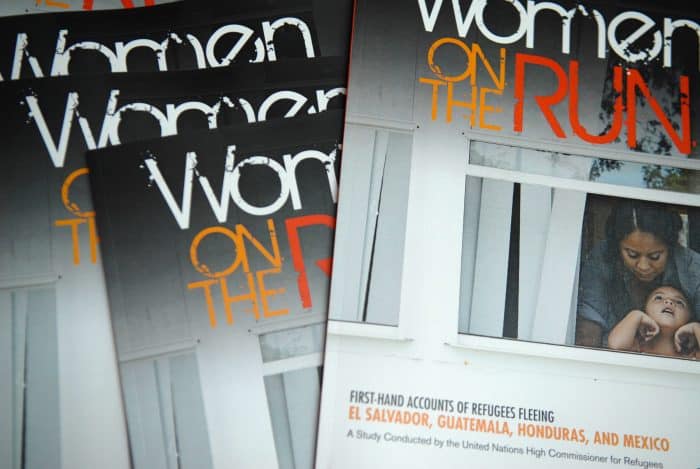
All three women, whose names have been changed to protect their identity, are now living in the United States with asylum applications pending. They were among 160 women interviewed in August for a study issued last week by the United Nations High Commission for Refugees (UNHCR).
“Women on the Run” is 56 pages of first-hand accounts by refugees from El Salvador, Guatemala, Honduras — known as the Northern Triangle countries — and Mexico, as well as a description of the violence, persecution and lack of government protection that forced them to flee.
“Most of the headlines are about Europe, Syria and Iraq, but this must no longer be ignored,” said U.N. High Commissioner for Refugees António Guterres. “Organized crime and violence have dramatically increased in Central America and Mexico, with the countries of the Northern Triangle leading the world’s homicide ranking. As a result, more and more people are seeking asylum in the United States and elsewhere.”
Guterres, a former prime minister of Portugal, said that since 2008, his agency — which operates on an annual budget of $7 billion — has recorded a five-fold increase in asylum seekers arriving to the U.S. from the Northern Triangle region of Central America. It’s also seen a nearly 13-fold jump in asylum seekers from the same countries arriving in Mexico and other parts of Central America.
“Sixty percent of children arriving at the southern U.S. border [in 2014] and nearly half arriving in Mexico were victims of violence, up from only 13 percent in 2008,” he said. “This report emphasizes the urgency of the crisis. It looks at women, what forces them to flee, and what risks they face along the way.”
Gang-controlled neighborhoods; No protection from authorities
Of the 160 women interviewed by UNHCR, 63 are from El Salvador, 30 each from Honduras and Guatemala, and 37 from Mexico. All have either received asylum from U.S. immigration authorities, or have at least been found to have a credible fear of persecution or torture if returned to their home countries.
“These women were raped, assaulted, extorted and threatened by members of heavily armed transnational groups,” said Guterres, who is stepping down in December after 10 years at the helm of UNHCR. “They spoke about their families having to contend with gunfights and death threats. They watched family members being abducted and murdered. The authorities often struggle to contain this violence, and many of these women are left with no choice but to run for their lives.”
Guterres added: “Becoming a refugee is always an ordeal, but believe me, for most of these women, the journey to safety is absolute hell. That’s why the protection of women and children is a core priority for UNHCR globally.”
Among the report’s findings:
- 85 percent of women interviewed described living in neighborhoods controlled by armed criminal groups.
- 64 percent described direct threats and attacks by such groups as at least one of the primary reasons for their flight.
- 58 percent of women from Northern Triangle countries gave accounts of sexual assault and sexual abuse.
- 100 percent of the women interviewed who reported attacks, sexual assaults, rapes or threats to the police said they received ineffective protection, or no protection at all, from the authorities.
- 10 percent of the women interviewed said the police themselves had persecuted them in their home countries.
“This report makes a very important contribution,” said Doris Meissner, former commissioner of the U.S. Immigration and Naturalization Service and now a senior fellow at the Washington-based Migration Policy Institute. “It forces us to deepen our understanding of what’s going on in our own neighborhood and stimulates much more consideration of what we need to do.”
According to U.S. government statistics, 82 percent of the 16,077 women from Guatemala, Honduras, El Salvador and Mexico who were interviewed by U.S. immigration authorities in 2014 were found to have a credible fear of persecution or torture, and were allowed to pursue asylum claims in the United States.
“No country is more dangerous for women than El Salvador,” said Guterres. “Each day, more and more people are forced to flee. The region hasn’t seen such violence since the civil wars of the 1980s, but none of the women we interviewed could find safety by turning to their own government.”
He added that Washington must pay more attention to the refugee crisis brewing in this hemisphere.
“What we are witnessing today is a mixed movement made up of people who likely have a fear of persecution, and others mainly moving for economic reasons,” he warned. “All of them have human dignity and rights that must be respected. But countries have the obligation to grant protection to people fleeing. This is not the first refugee crisis in the Americas region, but it is unique — and I’m convinced it can only be solved by a regional approach.”
Costa Rica increasingly a destination for Northern Triangle refugees
The United States isn’t the only place to which refugees are fleeing. Last year, according to UNHCR figures, Costa Rica received more asylum applications from Salvadorans than Colombians for the first time ever. And Mexico has seen a 65 percent jump in asylum cases in a single year, even while facing its own high levels of violence.
Some 40 percent of women surveyed by UNHCR didn’t even report the crimes they fled, believing the police would not only be ineffective but perhaps even criminally involved. A huge red flag, said Eric Olson, associate director of the Wilson Center’s Latin America Program, is the fact that 69 percent of these women fled somewhere else within their country before leaving altogether.
“Often, the justice system in these countries is dysfunctional, and only 3 or 4 percent of cases are actually prosecuted fully and end up with some kind of sentence,” Olson said. “The prospects of avoiding violence by holding people accountable is almost non-existent for most poor women.”
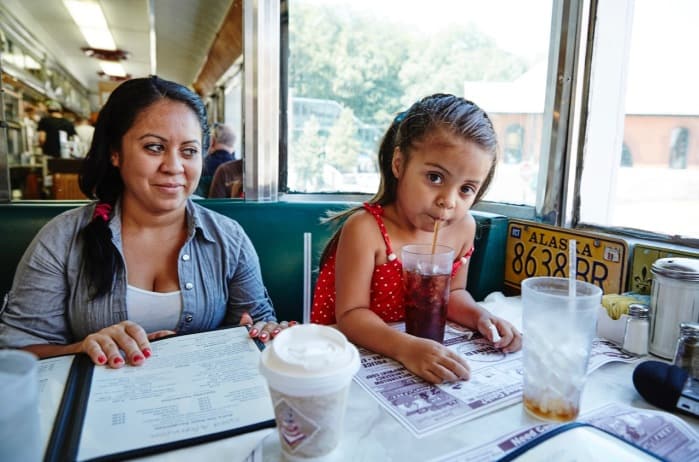
Norma, who’s living at an undisclosed U.S. location as she awaits the outcome of her asylum case, said she’s still traumatized by the gang rape she suffered in El Salvador.
“I feel dirty, so very dirty. This is why I wake up not wanting to live,” she told UNHCR interviewers. “Sometimes, I wake up and think it was just a nightmare, but then I feel the pain and remember it was not.”





