
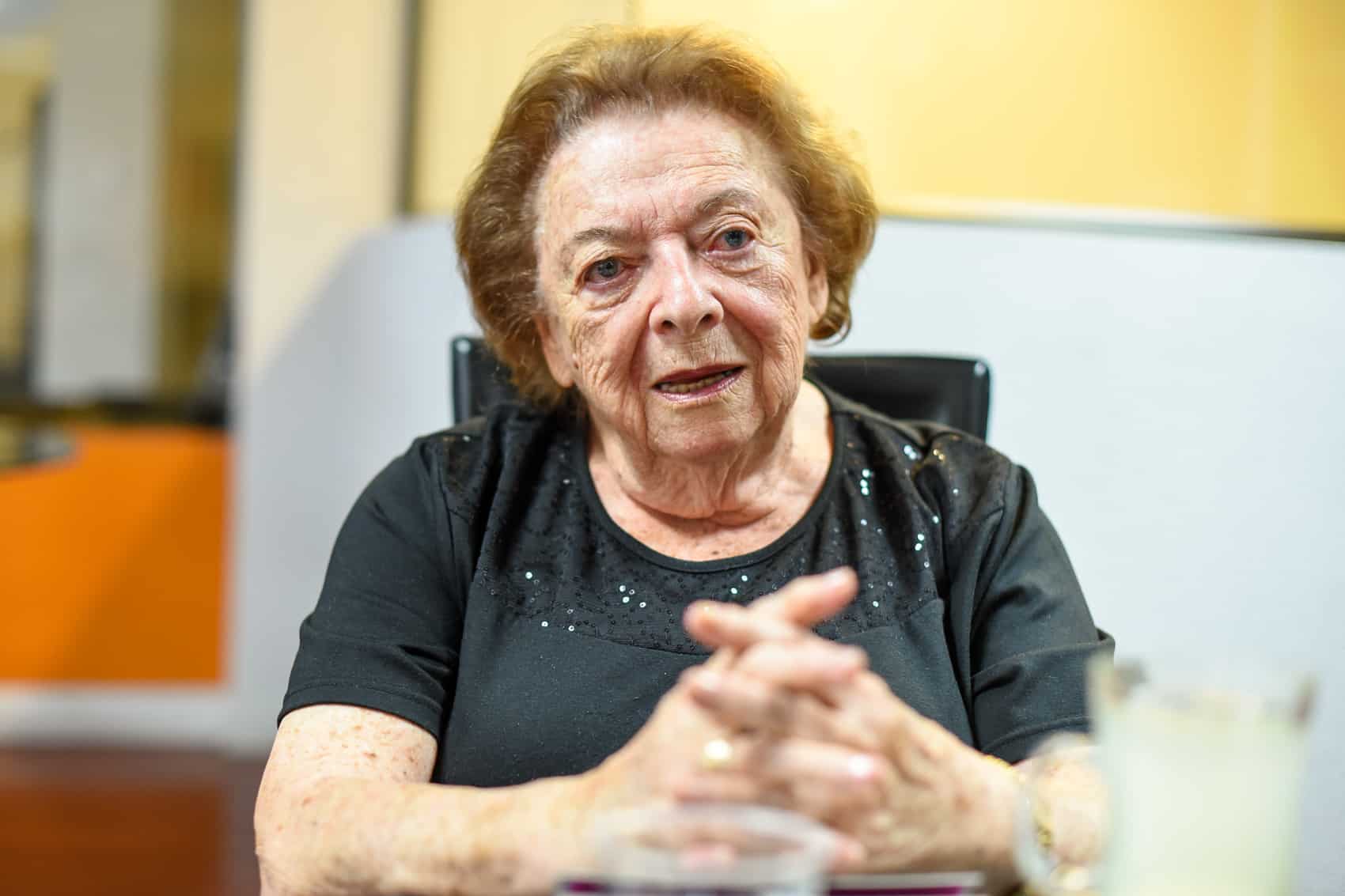
As part of our coverage of the inauguration of the “Parque de la Vida” (“Park of Life”), which honors the 190 Holocaust survivors who immigrated to Costa Rica after World War II, The Tico Times had the opportunity to sit down with Holocaust survivor Magda de Davidovich. This native of Hungary and resident of Montes de Oca, on the east side of San José, is approaching her 95th birthday. She shared her story with us – from the time her family was saved by her sister’s intuition, to their time in the Terezín camp, to their post-war flight out of Hungary and across the Atlantic. Excerpts follow.
My story begins when my father arrived in a little city in Hungary when he was a young man. He was studying law and was just about to finish his degree when World War I started; he had to serve in the war from 1914 to 1918. When the war came to an end and he attempted to go back home, the train wasn’t working, so he asked for a Jewish family who could host him. He was told that there was a widow and her daughter. When he got to the widow’s house it was love at first sight, so he stayed and got married.
They started working the land together and then planted a vineyard. But [in 1933] the Hitler government began, and in Hungary the Jewish persecution began with the reduction of Jewish people’s rights.
When the Second World War began, I had just graduated from high school. Naturally, it had become completely impossible for a Jewish girl to go to university. After that, every minute got worse and worse.
When the Nazis got to Hungary, they announced what was to be done with Jews. First they took us out of our homes and settled us in a block where they concentrated all Jewish families; in one house they would put as many as four families together. There we were for some months, until they took us to a bigger city. There was this ghetto where we were housed for several months in a big brick building in terrible conditions.
After that they began to form groups of approximately 25 people each, telling them they were going to work in Germany. Because of the awful circumstances we lived in, a lot of people accepted this. My sister, who was five years younger than I, said that her intuition told her it was better not to go, so we didn’t.
Because we stayed, we become part of the 15,000 Jews who were bought by American Jews who took us to work to a ranch in Austria. There we stayed for most of the war. Half of the group were young, so we managed to keep the strength and spirit of our parents up.
Near the end of 1944, we were taken to the Terezín [ghetto and concentration camp in Czechoslovakia], near Prague, that the Germans had built. There was an orphanage and different places to spend time. One day we noticed that a group of people had disappeared, and in the night we saw the furnaces burning. We knew what was going on. We thought that was going to be the end [for us].
On May 9, 1945, the Russian troops came and opened the concentration camps. At that moment we didn’t know what to do or where to go. For many years we had been suffering. We wanted to go back home and be human beings again. The Russians opened the Germans’ grocery stores and gave all the food to the Jews, but because they hadn’t eaten any real food for so many years, many of them died because of it; their bodies weren’t used to good food.
We went back to Hungary around June 1945, and we thought everything would be finally fine. I got into university, which had had been my intention since long before the war started, to study literature. When I was in my last year there, the Russians had already taken power with the help of some Hungarians. We had to study Marxism and Leninism, so let me tell you that you are sitting in front of an expert in that field.
The Communism got worst and we were sick of it, so the Revolution [of 1956] began in Hungary, and living there was awful. By that time borders were closed by what was known as the Iron Curtain, and no one could go in or out. By coincidence, a family member was in the Army, so he offered his help to get us out. We took only one handbag and one change of clothes each. One night we crossed the border to Austria.
My husband had had been a prisoner of war in Russia for many years, so he had learned to speak Russian. When we attempt to cross the border some policemen caught us, but my husband was able to talk to them and ask them to let us free. Thanks be to God, they did, and we got to Vienna, where the International Jewish Associations helped us.
Once there we thought “Now what are we going to do? Where are we going to go?”
I had a sister who had left for Israel with her husband and daughter, so we called them, but they told the situation there was awful. We were really tired of wars and everything so we decided not to go, which I now regret. On the other hand, my husband’s family managed to go to Mexico after the war. My husband’s brother met a Costa Rican-Jewish woman who was in Mexico at the time. They got married and came to live in Costa Rica.
They told us that living here in Costa Rica was much better, and that they would welcome us to their homes, and that’s how we got here in February 1957. We embarked from Genoa, Italy, during the winter. We crossed the Atlantic and I was so sick I thought I would die before arriving.
I’m so in love with Costa Rica, because the place where I was born and raised wanted me to die, but then I came to a completely strange country, where I was nobody – and despite that, nobody persecuted me and nobody hated me. Instead, they gave me job opportunities, and my sons were able to have opportunities as well. I have three sons. All of them became professionals here in Costa Rica. Here, we are free, and we have the opportunity to live as real people.
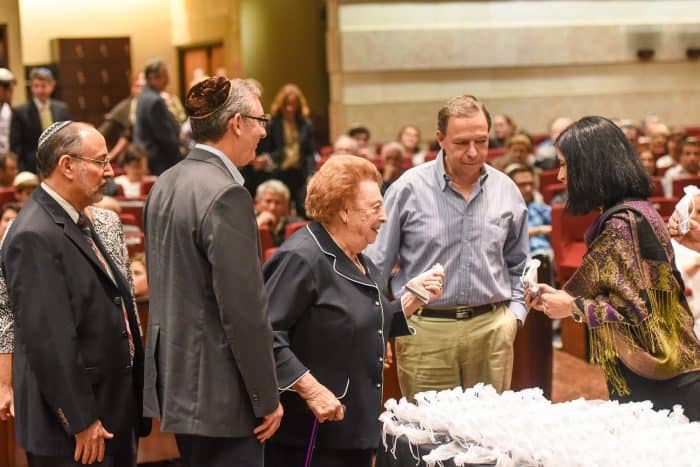
It’s so sad we didn’t have a crystal ball during the darkest moments, so we could see that despite what those damn Nazis were doing to us, there would so many survivors and we were going to reunite in the synagogue all together in a celebration. Because we didn’t just survive. We multiplied.