

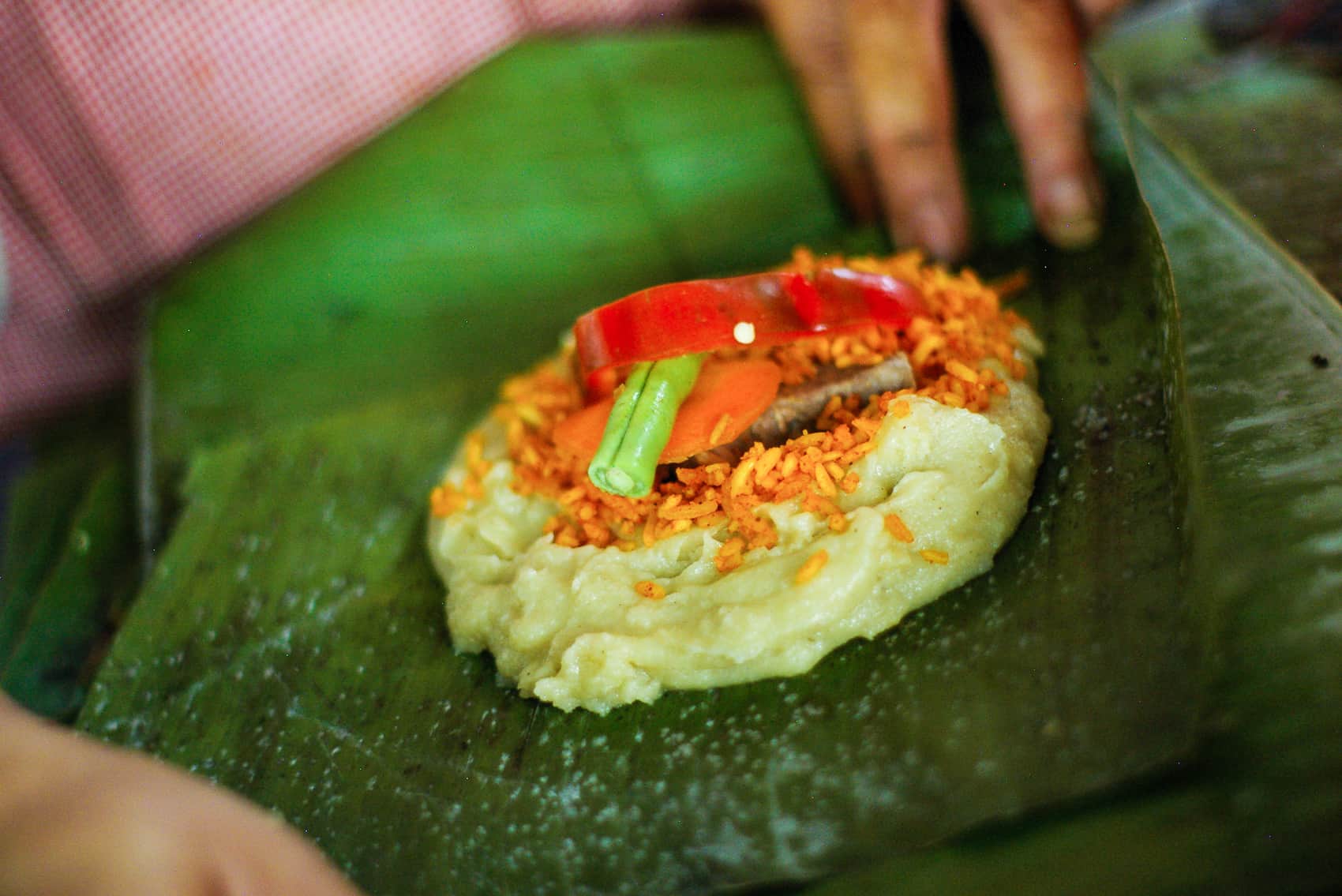
Tamales are serious business come Christmas in Costa Rica. Unwrapping the steamed banana-leaf covering of a Costa Rican-style tamal is like opening a present. But considering the estimated 196 million pairs of tamales eaten during December — three tamales per Tico per day, according to a study by the University of Costa Rica — maybe the daily ritual of the Advent calendar is a better analogy for how people eat the seasonal treat.
Tamales go deep in Costa Rican culture and they are one of the most accessible ways to tap into your inner Tico, especially during the Christmas and New Year holidays. Market stands, restaurants and groceries around the country sell tamales bundled in sets of two, tied with twine; this is called a piña de tamales. Dropping a piña into a steamer for a few minutes is the ultimate in fast comfort food. Hot pockets, these are not.
Dating back to pre-Columbian times, tamales have always had a festive element, said Patricia Sedó, a nutritionist and food historian at the UCR, in a statement about the recent tamal study. The corn filling symbolized the sun god for indigenous people 500 years ago, but when Spanish conquistadors colonized the isthmus, the food became part of festivities celebrating the immaculate conception and Christmas.
Unlike Mexican tamales, served year-round in corn husks, the Costa Rican variety, wrapped and steamed in banana or plantain leaves, is usually only seen in December. Everyone has their own family recipe, but the basic ingredients for the Christmas – or navideño – variety are seasoned masa — a cooked cornmeal similar to polenta — sweet pepper, carrot, rice, onion, potato, green beans, and a meat, with pork being the traditional choice this time of year. Sedó said that the addition of prunes or olives that some families prefer demonstrates how food cultures mixed: banana leaf, corn and peppers from the Americas together with pork, olives and prunes from European migrants.
According to the UCR survey, 91.3 percent of Ticos participate in the tamal tradition, and 62 percent make them at home. Those 38 percent who don’t make them at home will buy an estimated 19 million piñas of the masa-filled pockets. The Economy Ministry published a study on the estimated cost for a family to make the labor-intensive treats: The average family paid more than ₡24,000, roughly $50, to buy the ingredients for 50 tamales.
The best way to enjoy the seasonal treat is at a tamaleada, the tradition of taking a break from buying gifts to invite friends over to the house in the afternoon to share a tamal, a cup of coffee and some good conversation. The tamaleada is one way that tamales are gifted like Christmas cookies up north. Plus, they’re already wrapped!





