

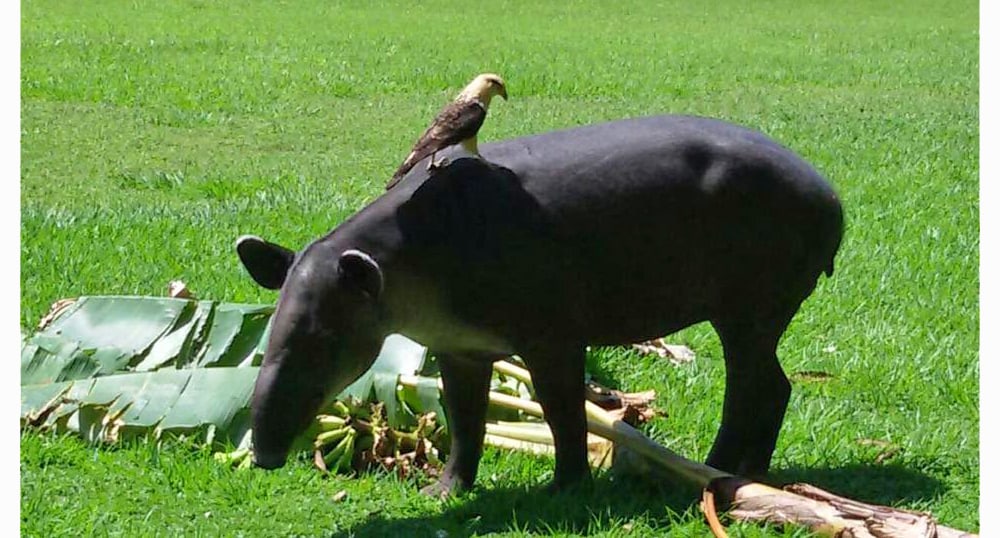
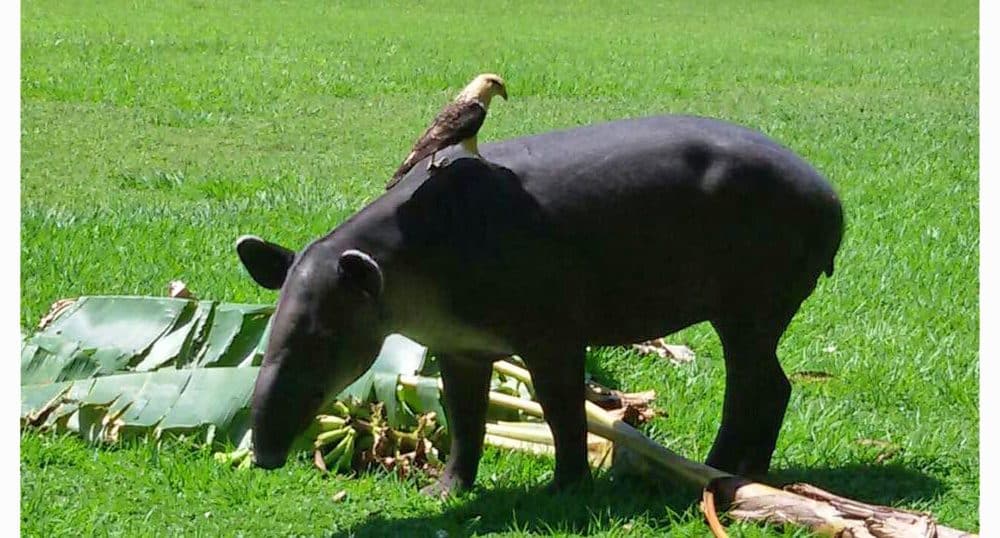
Looking at this photo, we see a unique and harmonious interaction between two animals: a yellow-headed caracara and a Baird’s tapir. The caracara is perched atop the tapir, enjoying what appears to be a peaceful ride in a grassy area. The scene is a beautiful representation of symbiosis often observed in nature, where animals of different species interact for mutual benefit. In this case, the caracara is likely using the tapir as a vantage point to search for food or to keep an eye on its surroundings, while the tapir remains undisturbed.
This interaction took place near the La Sirena ranger station in Corcovado National Park, one of Costa Rica’s most biodiverse areas. The park is home to many species, including the Baird’s tapir, the largest land mammal in Central and South America. Known for their pig-like appearance but genetically closer to horses and rhinos, tapirs are primarily solitary animals. They are herbivores and often found foraging for fruits and vegetation in forested areas.
The yellow-headed caracara, a bird of prey, is often found in both wild and human-influenced environments like agricultural areas. These birds are known to be opportunistic feeders, scavenging on carrion and picking off small insects and animals. One of their unique behaviors is perching on large animals like cattle and, as seen in this image, tapirs. This behavior allows the caracara to pick off ticks, insects, and other parasites from the tapir’s back while simultaneously getting an elevated view of the landscape to spot prey.
Caracaras are frequently observed in agricultural landscapes, where they often perch on cattle. This behavior provides a mutual benefit, as cattle help the birds by stirring up insects and other small animals while grazing, making them easy prey for the caracara. Similarly, the tapir in this image might benefit from the bird’s presence by having pests removed, highlighting an interspecies interaction that benefits both animals. This relationship showcases the balance and interconnectedness of ecosystems, particularly in biodiverse environments like Corcovado National Park.





