

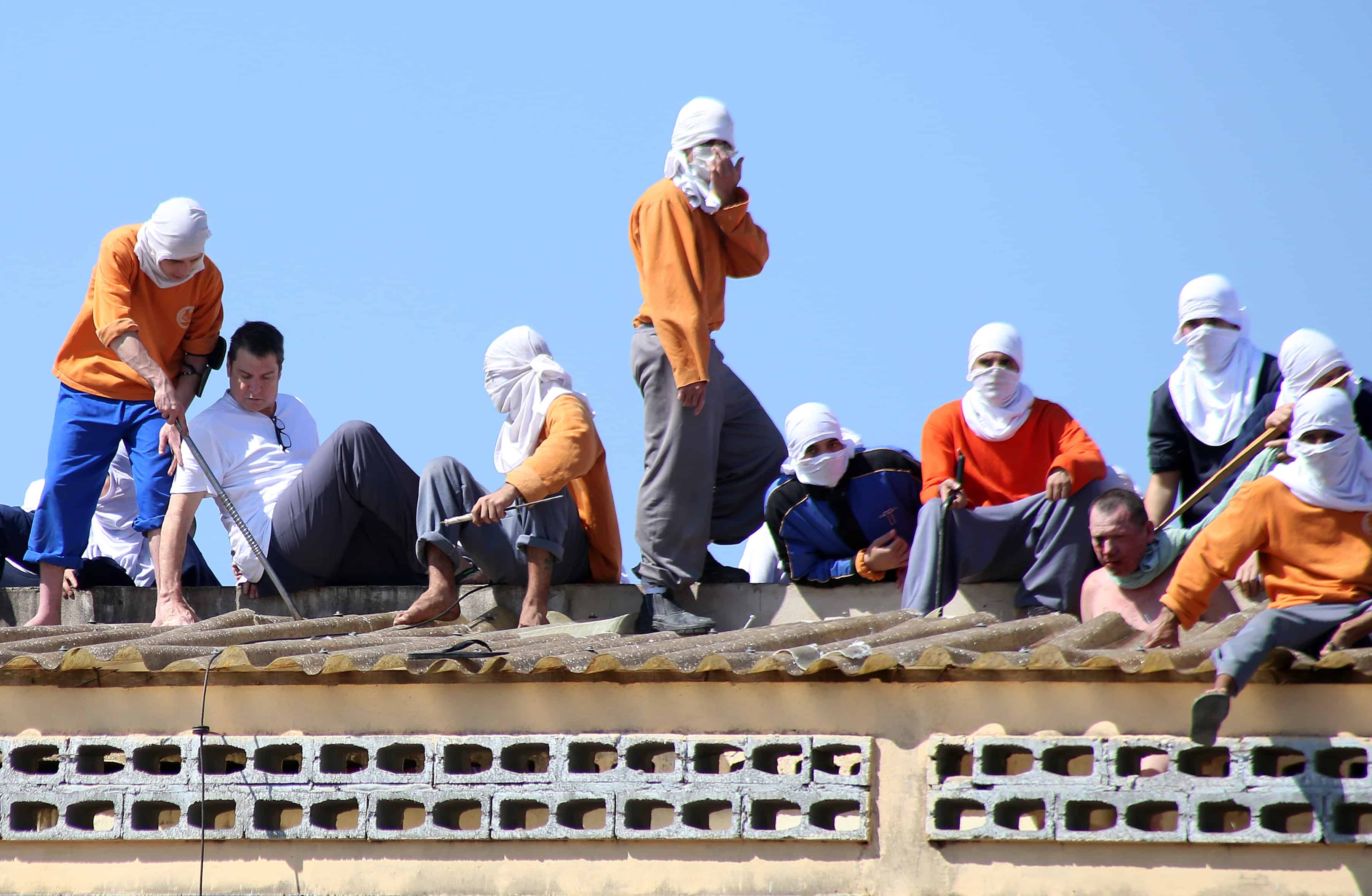
MONTEVIDEO, Uruguay – Latin America’s prisons are overcrowded, violent and sometimes lack even the most basic services, despite the fact that several of the region’s current leaders themselves spent time behind bars.
As incarceration rates have soared across the region over the past two decades, Latin America’s jails have become packed, nightmarish facilities where serving time is a battle to survive, rights groups say.
In Brazil, whose President Dilma Rousseff was jailed by the former military regime for three years in the 1970s, nearly half of all prisons lack enough beds for their inmates, according to FIO, an umbrella group of watchdogs and rights organizations.
During a recent mutiny at a prison in the southern city of Cascavel, rioting prisoners decapitated two fellow inmates.
And last year, at the only prison in the northeastern city of Pedrinhas — a 1,700-capacity facility that holds 2,500 inmates — 60 prisoners were killed.
“It’s a life where people are fighting each other to the death every day,” inmate Mario Ibáñez told AFP in the Chilean capital, Santiago, where detainees complain of cells with no light or ventilation — a “jungle full of wild animals,” he said.
Like Brazil, Chile has a leftist president, Michelle Bachelet, who was jailed and tortured by her country’s military regime in the 1970s.
In Chile’s prisons, “there are systematic episodes of violence marked by inmates wounding each other and killing each other in brawls,” said Ana María Morales, who runs rehabilitation programs for former inmates at a nonprofit organization.
“It’s not only violence between inmates, but also by prison staff,” she added, condemning abusive punishments by guards.
“We made mistakes and we’re paying for them. But we’re not monsters,” said Dario, a prisoner doing time for theft in Punta de Rieles, in Uruguay.
The South American country is also led by an ex-political prisoner, José Mujica, detained for more than 13 years by the former military regime.
Uruguay today comes in for regular criticism from watchdogs for conditions inside its prisons.
“The general population has a sense of insecurity, sometimes fed by the media, and people want prison, prison and more prison,” said Mirtha Guianze, head of Uruguay’s National Human Rights Institute.
She said she is concerned about government plans to begin trying 16-year-olds as adults.
“Are they going to be sent to adult prisons?” she asked, saying that would only exacerbate overcrowding. “We’ve asked, but no one’s given us a clear answer.”
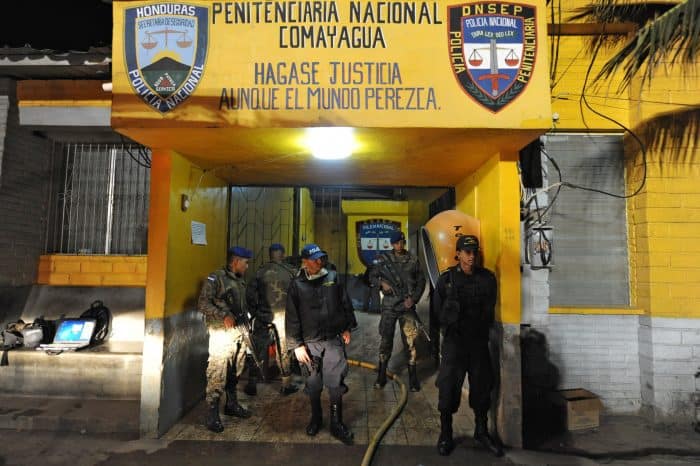
Extreme violence
The three countries have the highest incarceration rates in Latin America, except for Cuba.
Uruguay has 281 prisoners per 100,000 inhabitants, Brazil 274 and Chile 266, according to the International Centre for Prison Studies (ICPS).
That doesn’t come near the rate in the United States — 716, the highest in the world — but is far more than in countries such as Canada (118), Australia (130), France (98), or Spain (147).
“From 1992 to the present, all the countries of Latin America have increased their incarceration rates, without exception,” said Elias Carranza, head of the Latin American Institute for Crime Prevention, a United Nations body based in Costa Rica.
“Most of them have doubled their rates, many have tripled and some are on the verge of quadrupling,” he added.
Incarceration rates have risen worldwide, but the trend is “strongest in low- and middle-income countries, which is the case for Latin America,” he said, linking the phenomenon to growing inequality, rising crime and harsher sentences.
Overcrowding is a problem across the region.
In Venezuela, there are nearly three times as many prisoners as beds, fueling an environment of extreme violence, with more than 16,000 inmates killed in the last 15 years, according to the Venezuelan Prisons Observatory (OVP).
Most of those in jail — 64.56 percent — are still awaiting trial.
“We could let people remain free until sentencing, but unfortunately every person who is accused of a minor crime is jailed,” said Marianela Sánchez, legal coordinator at OVP.
“That makes overcrowding even more acute.”





