

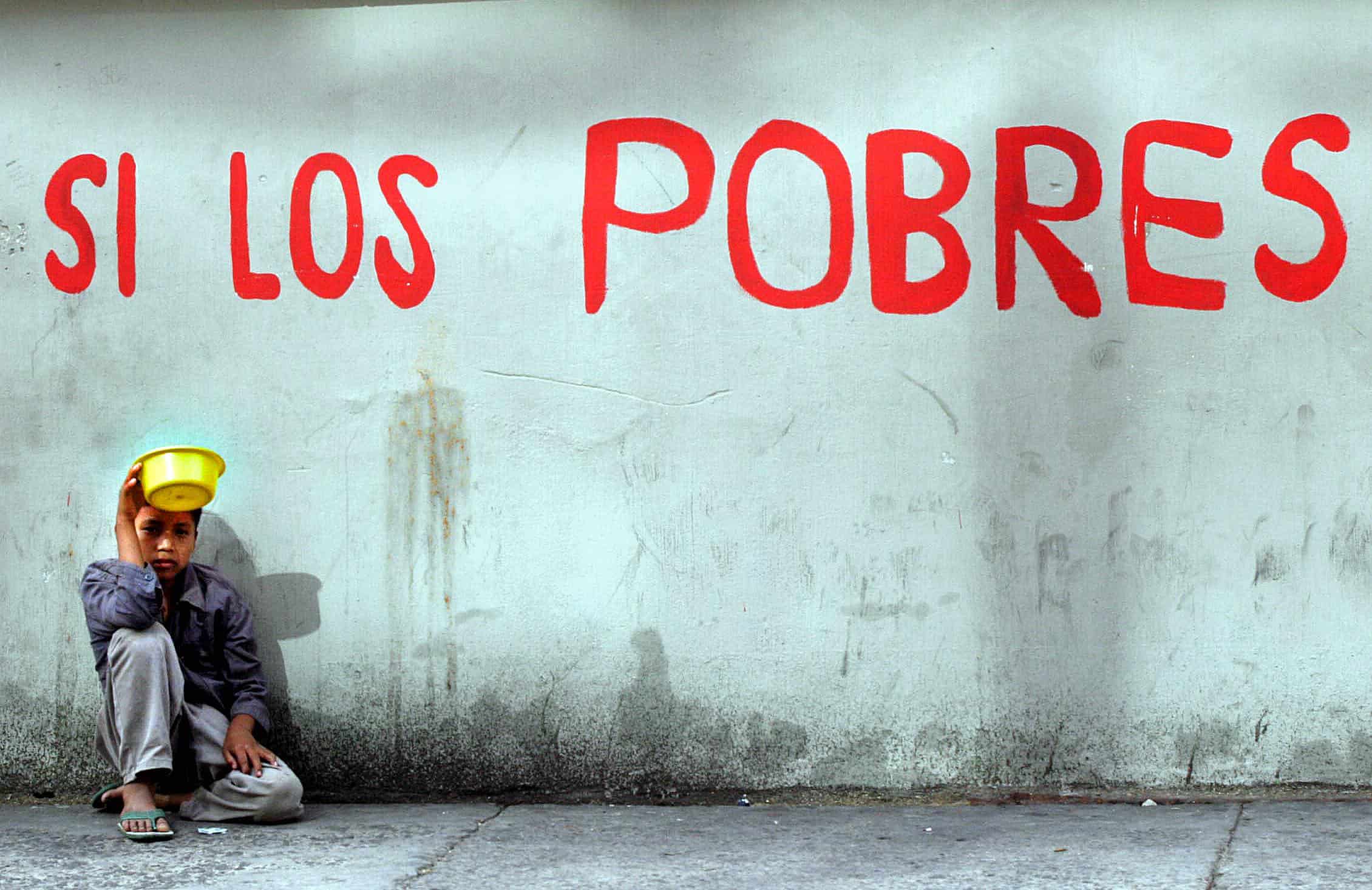
Costa Rica’s former President Óscar Arias is correct in his assessment of the cause of the current U.S. “child immigration problem.” The clear takeaway is: If you interfere in the internal affairs of another country you create a responsibility for the outcomes. At least, try not to be shortsighted to the point of repeating past mistakes.
What to do about the existing problem is one issue addressed by some of the commentators. The problem with some of the solutions offered is that unless we understand the root cause correctly, “The Problem” will always be with us. No amount of border security is going to solve it.
During the Cold War, the United States acted as though we forgot the lesson the “Greatest Generation” fought so hard to learn. That lesson was that the insulting and damaging economic policy applied to Germany following World War I, and the resulting social destabilization of that country, were the conditions that allowed Hitler to ascend. That generation knew we should not make the same mistake twice. The result was the Marshall Plan, which turned out to be one of the most productive national investments since the Louisiana Purchase.
But the “Greatest Generation’s” children – my generation – forgot the lesson. From the 1950s through the ’80s, we dabbled in covert, Central American, military and political activities to short-term ends, leaving the “beneficiaries” of our interventions to cope with the results. The article’s photograph of Guatemalan policemen is appropriate. Our interventions there, beginning in 1954, led to the longest and most vicious civil war in the Western Hemisphere. During the 1970s and ’80s, the U.S. supported the Guatemalan oligarchs and their army with aid used to perpetuate the existing lack of opportunity within the country. And it directly led to the most horrendous slaughter of civilians since the conquistadores.
Recommended: Guatemalans bury victims of 1982 civil war massacre
Guatemala is the poster child, but those same policies manifested in different ways in Nicaragua (the Contras and missiles to Iran) and El Salvador. Even Costa Rica was not completely immune (see Martha Honey’s book, “Hostile Acts”). For the most part, dictators’ policies in the central and southern Americas were supported by corporate stakeholders and oligarch families within each country. These are the entities with the most to gain and retain by preventing even modest systemic adjustments. Early families took the land from the indigenous, created agricultural wealth and installed a government-based entitlement system that limited opportunity to those same families and their designees. The governments were the families, and they were a pushover for U.S. protection money.
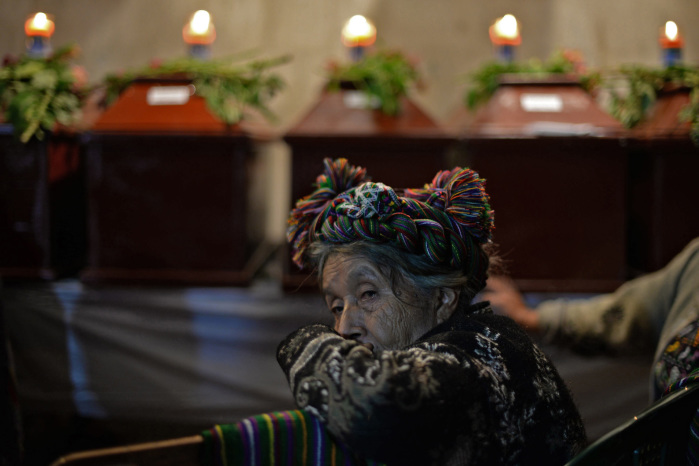
U.S. covert (and not-so-covert) activities directly prevented Latin American nation-states from making the moderate adjustments necessary to address root causes. The Árbenz administration (pre-1954) in Guatemala is a case in point. Worse, those U.S. activities supported state-sponsored terrorism for so long that the national cultures mutated. They came to expect, if not embrace violence. To paraphrase a national security commentator of the time, the ruling oligarchs and their armies became so addicted to murder as a method of political discourse they could not see any alternative.
It was and is a fertile environment for drug cartels. They even use some of the same personnel, now working for a new employer with (much) better pay. “Civil wars,” ex-President Arias says, “have been replaced by street wars. Mothers no longer cry because their children are marching off to battle. They cry because their children are falling victim to another kind of violence or because they have to send them in search of a better life.” He is obviously correct. The solution is not so obvious.

The problem highlighted by Arias’ comments may seem arcane and irrelevant to some. After all, we live in a world where the social instability of the United States, due to inequality of opportunity, approximates that of the “Banana Republics” of the 20th century. The same result was obtained in the Soviet Union, pre-1989, when the party oligarchs created similar preferences for themselves. (The oligarch system there has returned in an updated, capitalistic form). Systemic inequality has occurred in most of the developed world.
In the approach to violence, border security may be a short-term political necessity in a politically wracked United States, but let us not kid ourselves. It is not a solution.
Like the tipping point in climate change, the opportunity to turn back the clock on the violence and instability situation may have passed. “Violence begets violence,” said Martin Luther King, Jr., paraphrasing the Gospel of Matthew. It’s folk wisdom, but there is ample evidence that it is true. Another extended and violent crackdown, like the one that created cultures of violence, is not the answer.
There is no obvious or easy correction to the situation, particularly since any approach – even the superficial “War on (fill in the blank)” approach – requires complicated political agreements. More security, though perhaps a short-term necessity, is a mirage of an answer. The “Greatest Generation” had a collaborative approach that worked beautifully when the U.S. was rich enough to fund it. We can’t do that anymore, but the principles apply.
Whatever we do, we must address the social and economic opportunity issues and the interrelatedness of all our peoples, irrespective of borders.
Michael Crump is retired to a small coffee farm in Turrubares, San José, with his wife, Janet, and dogs Rose and China. He writes short stories and novels of the Cold War period in Central America, specifically Guatemala. His short stories have been published in La Revista de Lenguas Modernas (UCR), and are found on his website: http://www.stillpointfiction.com.





