

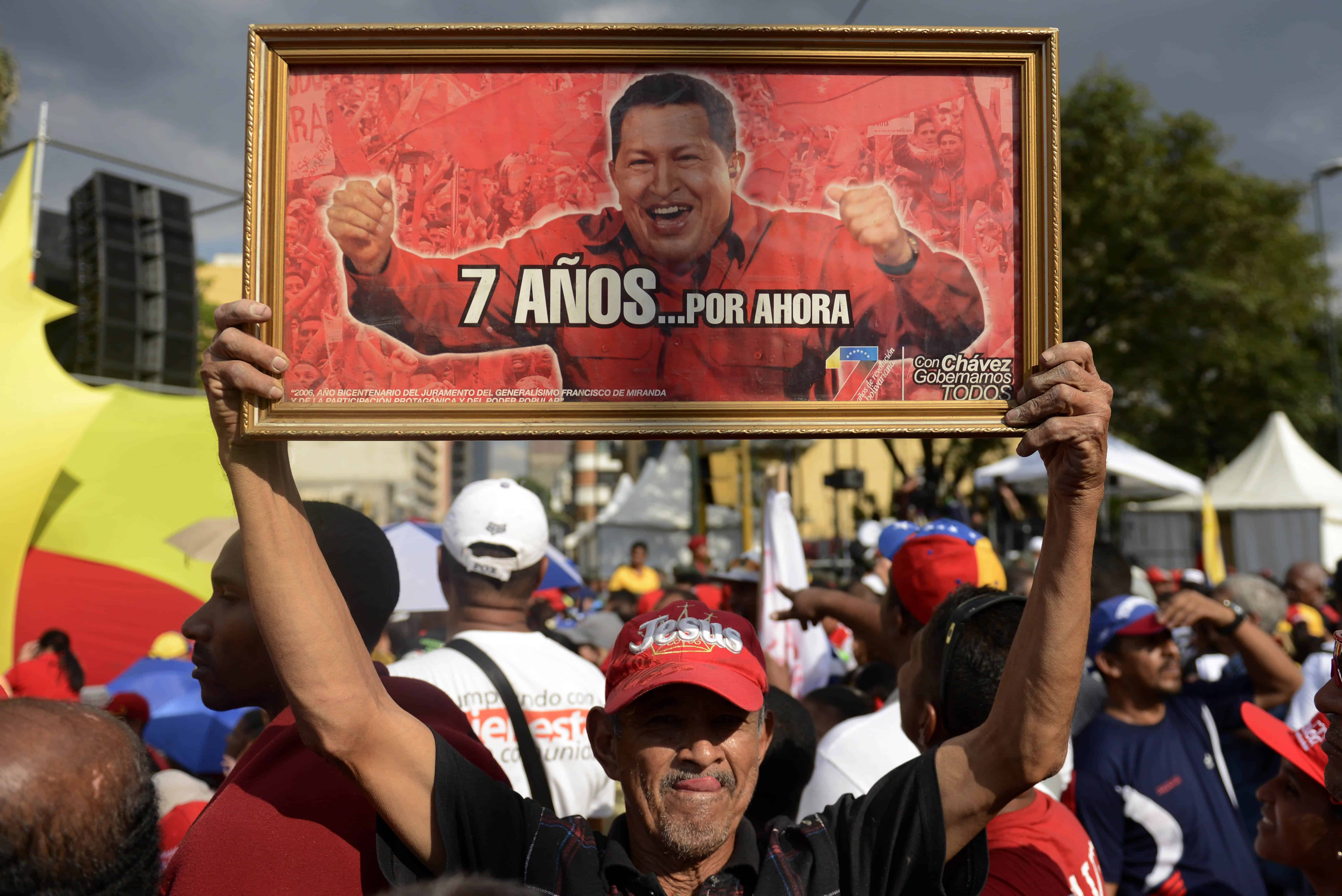
Protesters in Venezuela are portrayed as peaceful students repressed by an authoritarian Maduro government that has caused shortages and widespread crime. In this light, many will wonder why Nicolás Maduro’s administration continues to have widespread support.
The explanation is that the situation is much different than the way it is portrayed in the media. The protests are neither a student rebellion, nor are they peaceful. There is no government repression or censorship, and while there are economic and criminal problems, living conditions in the country have improved sharply.
Students have led opposition protests, but they are only a small minority from wealthy areas. Under the late leader Hugo Chávez and current President Maduro, the education system has been revolutionized to the benefit of the entire population, leading to an increase in the number of university students from 895,000 in 2000 to 2.3 million in 2011. Most of those are students from poor families who are pro-government. This has been confirmed by student elections.
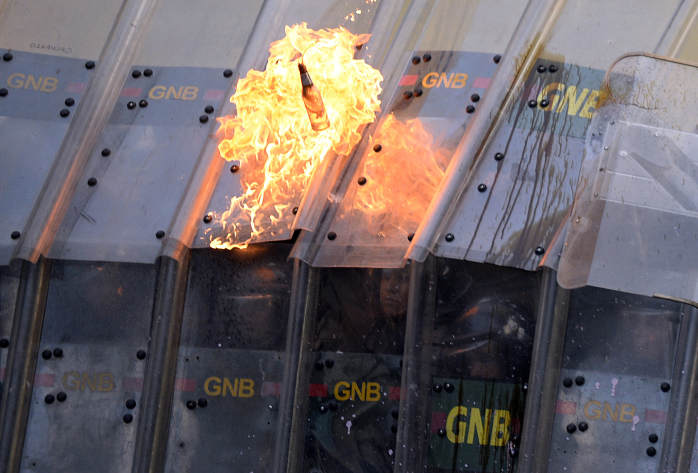
From the start, recent demonstrations were violent, as protesters assaulted police and bystanders, threw stones and Molotov cocktails, set fire to public buildings (including a state-owned TV-channel), and shot at police, Chavista demonstrators and journalists. On the other hand, the government has shown restraint. While claims about police repression are plenty, evidence is not – not a single piece of evidence has been produced. What have been provided are false pictures – not from Venezuela, but from Egypt, Ukraine and Chile.
“But what about the dead?” one might ask. As of this moment, at least 11 people have been killed, including one police officer, three Chavistas, four pro-opposition people and three passers-by. And how did they die?
The opposition killed at least seven, including one policeman, one Chavista who was shot while passing an opposition blockade, one man whose car hit a blockade, two motorcyclists who hit barbed wire set up by the opposition and one senior citizen (a known Chavista woman) whose ambulance couldn’t reach a hospital due to the blockades.
Then there is the case of beauty queen Genensis Carmona, who was shot during a protest, but not by police. Ballistic evidence shows, and witnesses clearly state, that she was shot from behind, in the opposite direction of the police, which points toward an opposition protester firing at the police and hitting her by accident.
The other deaths include one opposition protester run over while blocking a road, and one pro-government and two opposition protesters killed on Feb. 12. Those deaths occurred in uncertain circumstances.
The Venezuelan intelligence service SEBIN was accused of three deaths. This is under investigation, and one officer has been arrested. However, it is often left out that SEBIN acted against the orders of Maduro, who told them to stay in their barracks. Neither Chávez nor Maduro has ever had complete control over Venezuela’s security forces.
In 2002, police played a major role in the coup against Chávez, of which opposition leaders Leopoldo López and Henrique Capriles were a part, and where protesters from both Chavista and opposition camps were killed, creating a massacre for the opposition to blame Chávez to justify the coup.
Under Chávez and Maduro, Venezuela has been gripped by a revolution that gives power to ordinary people. Local democratic councils now exist all over Venezuela, as well as experiments with workers’ democracy in factories. Unlike what is often claimed, all major television channels – with the exception of two state-owned channels – are part of the opposition, as are hundreds of radio stations and newspapers. No Venezuelan TV station has been closed or censored, despite the fact that all major private TV channels boasted about their role in the 2002 coup. If The Tico Times organized a bloody coup against Costa Rican President Laura Chinchilla, would they be allowed to continue? In Venezuela, that’s what happened.
A principle complaint made by the opposition is shortages. Undoubtedly, it is a big problem, but two points should be made. One is that the shortages are a result of the opposition sabotaging the economy. The opposition includes all the largest companies, which are engaged in a destabilization campaign to withhold products from the market to create a false shortage and an increase in prices. Every week large secret illegal depots of everyday products are discovered, proving that the shortage is artificial. This was the same tactic used in Chile before the coup of 1973.
Secondly, despite sabotage, conditions are improving. Since Chávez took office, poverty has been halved, and extreme poverty has been reduced by 70 percent. Venezuela now has the highest minimum wage on the continent and the lowest inequality. Illiteracy has been virtually exterminated, while the percentage of the population with a high school education has increased from 53.6 percent to 73.3 percent.
Venezuela has free universal health care. According to the U.N.’s Food and Agriculture Organization, Venezuela is the country in Latin America closest to eliminating starvation. In the 1990s, dog food was the primary source of protein for millions, while under Chávez, malnutrition among children fell from 21 percent to 3 percent. Food consumption rose by 81 percent. And national production covers 81 percent compared to 71 percent before Chávez.
Three million hectares of land have been redistributed to poor peasants, and one million hectares have been given to native populations. Factories closed in the ’90s have been nationalized and reopened, unemployment has been halved, the gross national product has doubled, and public debt has been halved. Venezuela continues to have one of the highest growth rates in the world.
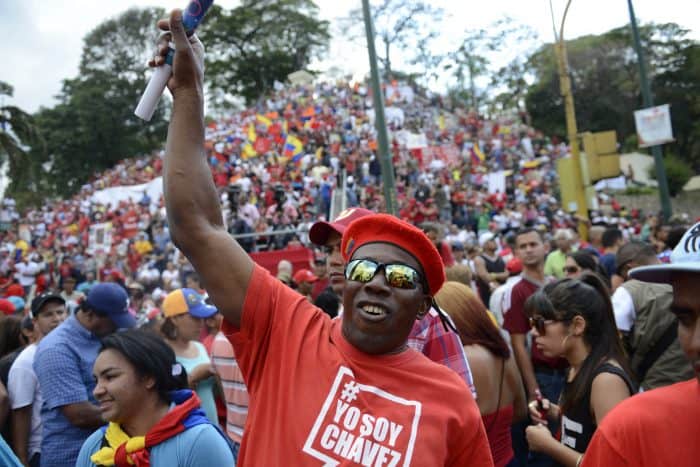
In these facts exist the simple answer as to why the Chavistas have won 19 out of the last 20 elections. The masses of Venezuela have for the first time felt respect, hope and power over their own lives, and they are not going to let a bunch of upper-class rioters put an end to that.
Niklas Zenius Jespersen is a spokesman in Denmark for the international solidarity campaign “Hands Off Venezuela.” Visit the group at www.handsoffvenezuela.org. Follow more of our Venezuela coverage at the hashtag #Bolivarian Revolution





